
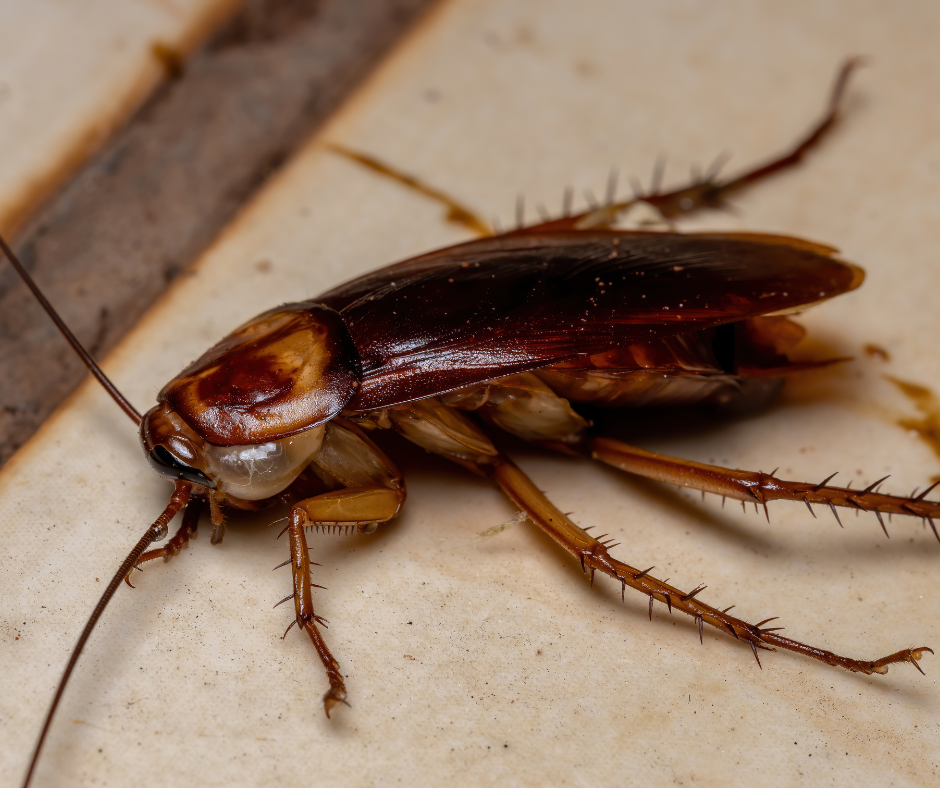
Most people assume roaches head indoors when the weather turns cold. In Florida it’s usually the opposite, and every June our phones prove it. If you’re wondering why roaches move indoors in summer, the answer is the same brutal heat and drought-then-deluge cycle that has the rest of us living by the thermostat: when conditions outside turn hostile, your cool, damp, well-stocked house starts looking like a resort.
Roaches move indoors in summer because extreme heat dries out their outdoor harborages and food sources. Above roughly 95°F, mulch beds, palm boots, and leaf litter stop being livable, so roaches follow moisture gradients into irrigated lawns, then wall voids, then kitchens – especially during dry stretches between storms.
Why roaches move indoors when the heat peaks
A roach is a moisture machine. It breathes through spiracles along its body that lose water constantly, which is why every species we deal with lives its whole life within a short walk of dampness. In a Southwest Florida summer, two things go wrong for them at once. The heat bakes the top layer of their outdoor world – the mulch, the fronds, the space under stepping stones – and the dry spells between afternoon storms cut off surface water entirely. Meanwhile your house sits there at 78 degrees with condensation on the AC lines, a drip under the sink, and a water bowl on the kitchen floor. They don’t invade. They evacuate.
The three roaches making the trip
American cockroaches (palmetto bugs)
The two-inch flyers that own Florida’s summer evenings. They live outdoors and come in through soffit gaps, weep holes, and under doors when heat or flooding pushes them. One in the kitchen at midnight is a visitor, not an infestation – but a steady stream means an entry point worth finding. We covered them fully in our palmetto bug guide.
Smokybrown cockroaches
The palmetto bug’s shinier cousin, and the most drought-sensitive roach we have – it dehydrates faster than almost any other species, which makes it the first to move when summer turns dry. Attics with even minor humidity are a favorite target.
German cockroaches
The exception that matters: German roaches don’t come in from your yard at all. They arrive in grocery bags, cardboard, and secondhand appliances, and summer heat accelerates their breeding once they’re in. If you’re seeing small, fast, half-inch roaches near the coffee maker, stop reading this and read our German cockroach guide – that’s a different problem with a different clock.
Where they get in (the four doors we find on real houses)
- Under the garage door. The rubber seal wears into a smile-shaped gap at each corner. It’s the single most common entry we find in Punta Gorda and Port Charlotte homes.
- Soffit and fascia gaps. Fifty summers of expansion open seams that lead straight into attic and wall voids – cool, humid roach housing.
- Plumbing penetrations. The oversized hole around the AC line set or the hose bib, usually hidden behind a shrub, usually never caulked since the house was built.
- Dry drain traps. A guest bathroom that hasn’t run water in a month has an open pipe to the sewer. Roaches use it like an elevator. Run every drain monthly; it’s free.
What actually keeps them out
Start with water, because they did. Fix the dripping hose bib, redirect the AC condensate line away from the slab, pull mulch back so it doesn’t touch the stucco, and don’t irrigate right against the foundation. Then close the doors: a garage door bottom seal costs little and pays off immediately, and a tube of exterior caulk handles most plumbing penetrations in an afternoon – this is the same logic as professional exclusion pest control, just the homeowner-sized version. Inside, deny the buffet: pet food up overnight, sink dry before bed, trash lidded.
Professional treatment earns its keep at the perimeter. A summer barrier treatment intercepts roaches at the slab line before they find the gaps, and granular bait in the damp zones – meter boxes, valve boxes, palm boots – takes down the population that’s queuing up outside. The University of Florida’s UF/IFAS Extension has good species photos if you want to confirm what you’re seeing before deciding how hard to respond.
When it's time to call someone
One or two big roaches a month in summer is Florida. Weekly sightings, roaches during daylight, or any sighting of the small German type means the population has moved from visiting to staying. That’s when a treatment plan beats a can of spray – the spray kills the scout and tells you nothing about the hundred behind the wall. Our cockroach control service starts with a free inspection: we find the entries and the harborages, show you photos, and quote the fix before treating anything. FDACS-licensed technicians, serving Southwest Florida since 2019. (941) 676-2005.
Common questions
Why do I suddenly have roaches in a clean house?
Because summer entry has nothing to do with housekeeping. Outdoor roaches move on heat, drought, and rain – a spotless kitchen with a worn garage seal will still get visitors. Cleanliness decides whether they stay, not whether they arrive.
Do roaches come in more after rain or during dry spells?
Both, for opposite reasons. Dry spells push them in looking for water; heavy rain floods their ground harborages and pushes them in looking for high ground. The week that alternates both – typical July here – is our busiest roach week of the year.
Does one roach mean an infestation?
One American roach in summer, no. One German roach, treat it as a yes until proven otherwise – they don’t wander in from outside, so a sighting means an established source somewhere in the house.
What smell keeps roaches away?
Honestly: nothing reliable. Citrus, peppermint, and bay leaves repel roaches in lab dishes, not in wall voids. Moisture control and sealed entry points outperform every scent remedy we’ve ever been asked about.