Equine Pest Protection
Explore Our Services
Let's Get Started
- Mon - Sat: 8:00 AM - 5:00 PM
- Parada St, Punta Gorda, FL 33982
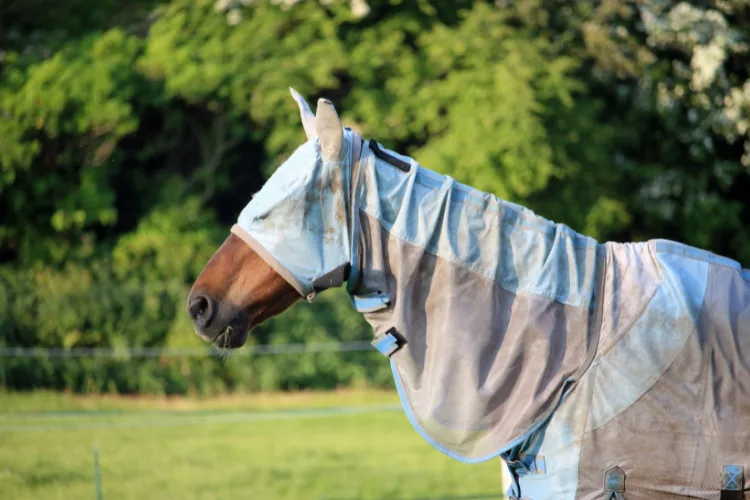
Horse people notice pest pressure before anyone else does, because the horses tell you. Stamping on hard ground, tails going constantly, a horse that will not stand for the farrier, a mane rubbed raw by August. None of that is cosmetic. It affects soundness, condition, behaviour under saddle, and on a boarding operation it affects whether your clients stay.
Bug Off Pest works horse properties across DeSoto, Charlotte, Sarasota and eastern Lee counties: barns, stables, tack and feed rooms, arenas, run-ins and paddocks. Free site assessment, and every product selected for use around horses.
The pests that affect horses
Biting midges are the ones most horse owners underestimate. Culicoides are tiny enough to pass straight through standard screen mesh, they feed at dawn and dusk, and they breed in wet muck and mud at the edges of paddocks, water points and drainage. In sensitive horses their saliva triggers a hypersensitivity reaction that produces the mane and tail rubbing, hair loss and open sores commonly called sweet itch. In Florida the exposure runs most of the year rather than for one season.
Stable flies bite the legs and lower body. The stamping response is the real cost, because a horse hammering a hoof into hard ground repeatedly is a concussion and soundness problem, not just a nuisance.
House and face flies feed around eyes, wounds and moist tissue, carrying pathogens and contributing to eye irritation and infection.
Horse flies and deer flies inflict painful bites and produce genuine safety incidents. A horse that bolts or spins under a rider because a tabanid landed on it is a handling risk as much as a welfare one.
Mosquitoes matter for disease. Eastern equine encephalitis and West Nile virus both occur in Florida and both are serious in horses. Vaccination through your vet is the primary protection; reducing the mosquito population around the property supports it.
Rodents in tack and feed rooms chew leather, blankets, saddle pads and wiring, and contaminate grain. This is one of the most expensive and least addressed problems on a horse property.
Wasps build in barn eaves, run-in sheds, arena structures and covered walkways, which are exactly where horses and people are.
Where horse property pest problems begin
Wet muck and paddock edges
Round bale and feeding sites
Tack and feed rooms
Barn structure and arena roofing
How we protect horse properties
Site Assessment
Source Control, Treatment & Misting
Tack Room, Feed Room & Structure
Why Florida horse owners choose Bug Off Pest
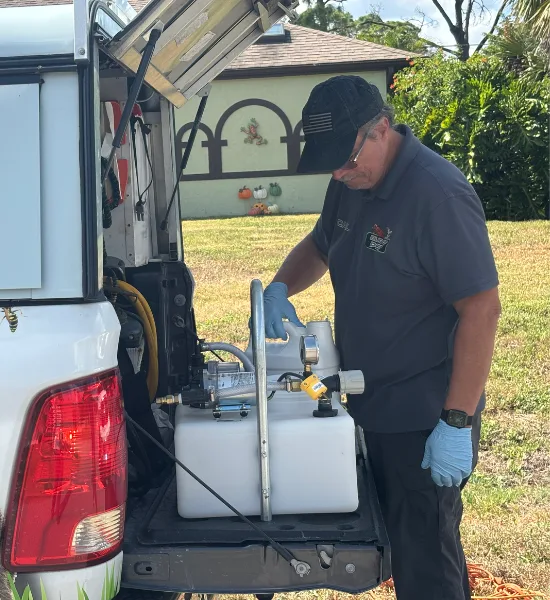
Equine work is core to what we do, not residential service adapted to a barn. We identify the species before recommending anything, we install and service misting systems ourselves, and we cover the tack room and feed room most pest companies never open. FDACS-licensed and fully insured, with every product chosen with horses, feed and water in mind.
- Misting systems sized, installed and serviced
- Tack and feed room rodent exclusion included
- Products selected for use around horses
Frequently asked questions
My horse rubs his mane and tail raw every summer. What causes that?
Most often a hypersensitivity reaction to biting midge saliva, commonly called sweet itch. Culicoides midges are small enough to pass through standard screen mesh and they feed at dawn and dusk. Control means reducing the wet breeding sources, misting timed to those windows, and fine mesh where you need it. Midges are weak fliers, so barn fans are genuinely effective. Any treatment for the skin reaction itself is a conversation for your vet.
Can pest control protect my horses from EEE and West Nile?
Not on its own, and we will not tell you otherwise. Vaccination through your veterinarian is the primary protection against both, and it is not optional in Florida. What we do is reduce the mosquito population and the standing water breeding it around your property, which lowers exposure. The two work together.
Are misting systems safe around horses?
Yes, when correctly specified and installed. We use products labelled for use around animals, position nozzles for coverage rather than saturation, and set cycles for peak fly activity rather than running constantly. We size the system to the barn and service it, since a misting system running empty or with blocked nozzles is worse than not having one.
Something is destroying blankets and saddle pads in my tack room.
Rodents, almost certainly. A tack room next to a feed room offers food, nesting material and shelter in one place, and leather, fabric and wiring all get chewed. The fix is exclusion and monitoring rather than bait sitting among the grain. It is also usually the single most expensive pest problem on a horse property and the one that gets the least attention.
Do you remove wasp nests in barns and arenas?
Yes. Eaves, rafters, run-in sheds and arena framing are common nesting sites, and a stung horse under saddle is a rider safety problem rather than a comfort one. We remove the nest and treat the site, because wasps rebuild in the same locations year after year.