Restaurant & Food Service Pest Control
Explore Our Services
Let's Get Started
- Mon - Sat: 8:00 AM - 5:00 PM
- Parada St, Punta Gorda, FL 33982
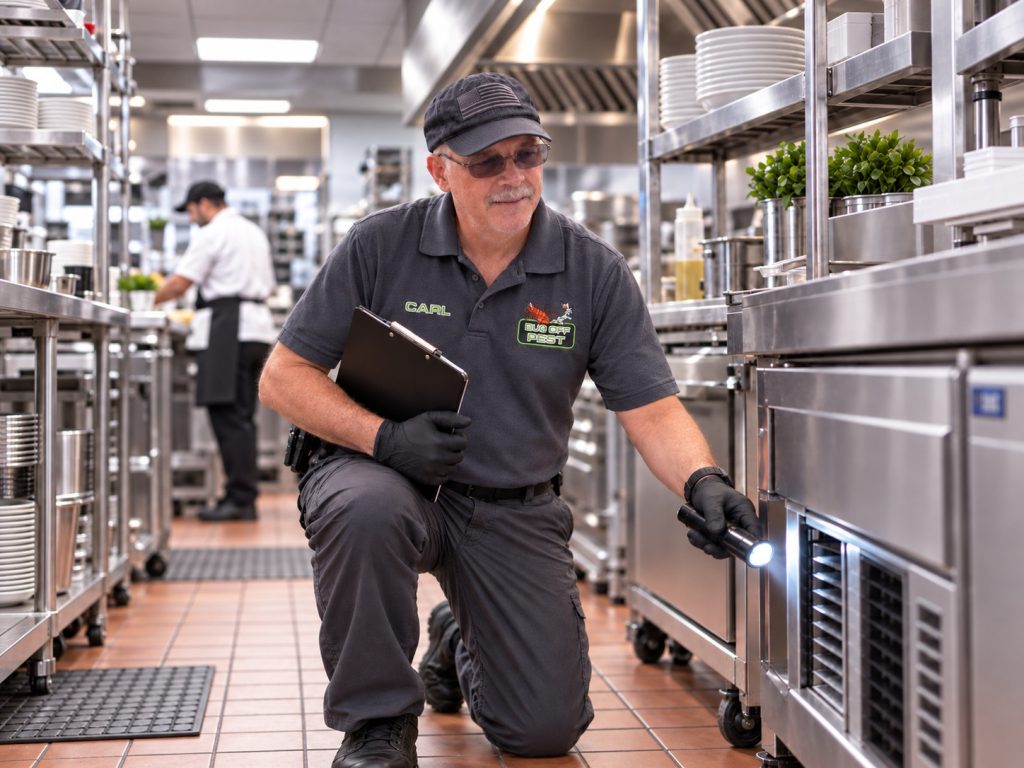
In food service, a pest problem is not a maintenance issue. It is a reputational one. Florida publishes restaurant inspection results, and evidence of roaches or rodents is treated as a serious violation that can stop service the same day. One inspection, one photograph, one review, and you are dealing with something far more expensive than a treatment.
Bug Off Pest services restaurants, bars, cafes, commercial kitchens and food storage across Charlotte, Sarasota, Lee and DeSoto counties. We work before opening or after closing, we document every visit, and we hold a Certified Food Safety Manager credential, which means we understand what an inspector is actually looking for rather than only how to treat what they find.
The pests that matter in a commercial kitchen
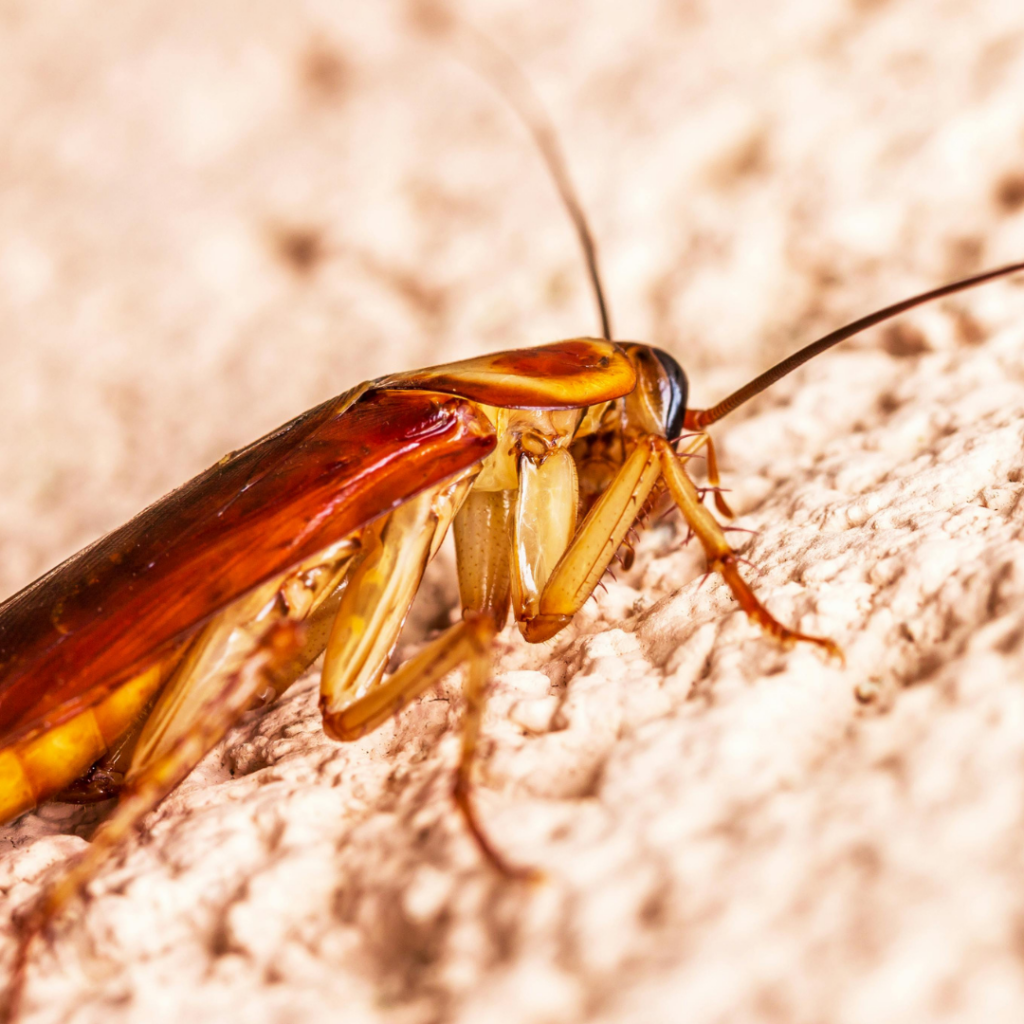
German cockroaches are the primary threat, and they behave differently in a kitchen than in a home. They harbour inside equipment: motor housings, the underside of prep tables, dishwasher cabinets, coffee machines, the warm voids behind and beneath everything on the line. Surface treatment reaches almost none of that, which is why a kitchen can be spotless and still have a population.
They also arrive rather than appear. Cardboard cases, produce crates, beverage deliveries and second-hand equipment are the usual routes. The cleanest kitchen in the county will take on German roaches if a supplier’s cases are carrying them.
Rodents come in at deliveries, dumpsters and back doors, and they are the finding most likely to end your service day. Storage areas, dry goods and equipment voids are where the evidence turns up.
Drain flies and phorid flies breed in floor drains, grease traps and the organic film inside pipework. They are persistent, they hover around food prep at exactly the wrong moment, and pouring cleaner down the drain rarely reaches the material producing them.
Stored product pests are the ones that get blamed on the kitchen unfairly. Small beetles and moths in flour, grain, spices and dry goods usually arrive inside the product itself, and they spread through dry storage from a single infested sack.
Where kitchen pest problems usually begin
The delivery door and dry storage
Cardboard cases and produce crates are the most common way German roaches enter a food service operation. Breaking down cardboard at the door rather than storing it inside removes a large part of the risk.
Floor drains and grease traps
Standing organic material inside drain lines and traps is a permanent fly nursery. If drain flies keep returning after cleaning, the source is inside the pipe rather than around it.
Equipment voids and motor housings
Warm, dark, undisturbed and close to food. Dishwashers, prep tables, ice machines and coffee equipment are where German roach populations actually live.
The dumpster area and back door
Rodent activity almost always starts outside. Bin proximity, propped doors, gaps under door sweeps and unsealed utility penetrations are the entry points inspectors look at too.
How we service food service accounts
Site Assessment
A licensed technician walks the operation front to back: the line, dry storage, walk-ins, drains, dish area, delivery point and the exterior around the dumpster. We identify pest pressure, the conditions supporting it, and the access points. Free, and it ends with a written scope, a price and a service frequency built for your volume.
Targeted Treatment
Gel baiting placed into equipment voids and harbourage rather than sprayed across surfaces, drain treatment that breaks down the organic film inside pipework, rodent monitoring and exclusion at the perimeter and entry points. Treatment is scheduled before opening or after closing so nothing interrupts service.
Documentation & Monitoring
Every visit produces a written report: what was found, what was treated, and any conditions on your side that need addressing. Kept on site, that record is what you hand an inspector who asks how the property is being managed. We also flag structural and housekeeping issues plainly, because treatment does not hold against a propped back door.
Why food service operators choose Bug Off Pest
We hold a Certified Food Safety Manager credential through the National Registry of Food Safety Professionals, so we approach a kitchen the way an inspector does rather than the way a residential technician would. We work outside trading hours. And we document properly, because in food service the record of how a property is managed matters nearly as much as the treatment itself.
- Certified Food Safety Manager on staff
- Service before opening or after closing
- Written documentation on every visit
Frequently asked questions
Do you provide documentation for health inspections?
Yes. Every visit generates a written service report covering findings, treatment and any corrective action needed on your side. Keeping that record on site demonstrates the property is under active management, which is a materially better position than having nothing to show.
Can you service outside trading hours?
Yes, and for most food service accounts that is how we schedule. Before opening or after closing keeps treatment away from food preparation and away from customers. Tell us your hours at the assessment and we will build the program around them.
How do roaches get into a kitchen that is cleaned every night?
They are usually carried in. Cardboard cases, produce crates, beverage deliveries and used equipment are the common routes, and a single egg case is enough to establish a population. Cleanliness affects how fast they multiply once inside, not whether they arrive. This is why monitoring at the delivery point matters as much as cleaning the line.
Do you spray chemicals around food preparation areas?
No. Food service work is built around gel baits placed into equipment voids and harbourage, drain treatment, monitoring and exclusion, not surface spraying across prep areas. Your technician will tell you exactly what is being placed and where before it happens.
What happens if an inspector finds something between scheduled visits?
Call us. Active accounts get priority response, and we will attend, treat, and document what was done so you have a record of the corrective action. That documentation is often what matters most in a re-inspection.