Ant Control
Explore Our Services
Let's Get Started
- Mon - Sat: 8:00 AM - 5:00 PM
- Parada St, Punta Gorda, FL 33982
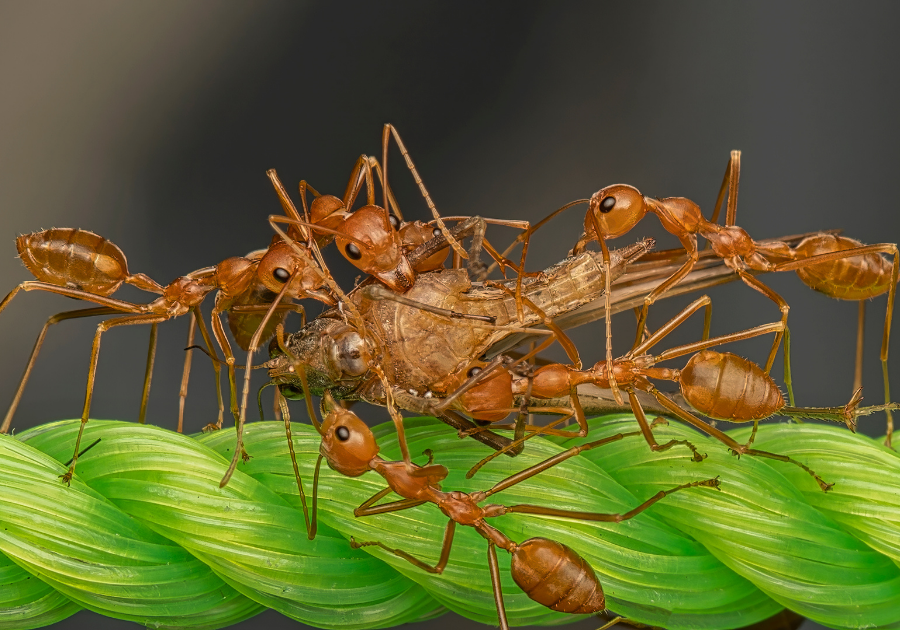
Ants are the most common call we get, and the one most people have already tried to handle themselves before they phone us. That is usually the problem. Store-bought sprays kill the ants you can see and leave the colony that produced them, and with several of the species common in Southwest Florida, spraying actively makes the situation worse.
Bug Off Pest treats ants at the colony rather than at the trail. Every job starts with a free inspection to identify the species, because ghost ants, fire ants and carpenter ants need three genuinely different approaches, and using the wrong one wastes your money and your time.
Understanding ant infestations in Southwest Florida
Florida has more ant species than most of the country and several of them behave in ways that defeat the obvious solution.
Ghost ants are the small pale-legged ants trailing across kitchen counters and bathroom surfaces. They nest both indoors and out, and a single infestation often has multiple queens spread across several nest sites. Spray the trail and the colony responds by splitting and relocating, a process called budding. You end up with three problems where you had one.
White-footed ants form enormous colonies and are extremely common in this region. They feed heavily on sweet material and are notoriously difficult to control with the wrong bait, which is why a treatment that works on one species can do nothing at all here.
Fire ants are the ones that matter for safety rather than nuisance. They build mounds in open lawn and pasture, they sting aggressively when disturbed, and they are a genuine hazard to children, pets and livestock.
Carpenter ants hollow out wood to nest in it. They do not eat it, and they generally target wood that is already damp or damaged. That makes a carpenter ant sighting worth investigating twice: once for the ants, and once for the moisture problem that attracted them.
Signs you have an ant problem
Persistent trails indoors
Lines of ants along baseboards, counter edges, plumbing penetrations or window frames. A trail means a established route between a nest and a food source, not a stray.
Small piles of displaced soil
Fine soil or sand pushed up beside the slab, along driveway edges or between pavers. Several ground-nesting species common here excavate this way.
Mounds in the lawn
Loose, domed mounds of fine soil with no visible opening on top. Disturb one and fire ants pour out within seconds. These do not go away on their own and they spread.
Winged ants indoors
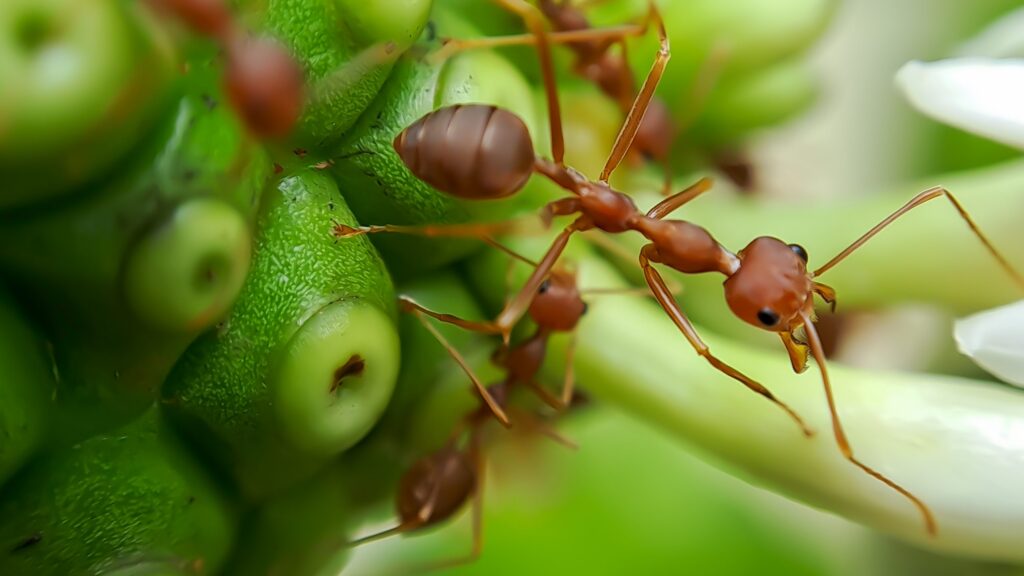
Our ant control process
Inspection & Species Identification
A licensed technician follows the trails to locate nest sites, checks the usual harborages, and identifies the species. This step decides everything that follows, because the correct treatment for ghost ants is close to useless on fire ants.
Targeted Treatment
We use a combination of non-repellent products and species-appropriate baits so foraging workers carry the treatment back to the colony. For fire ants in turf we treat mounds directly, broadcast where the pressure warrants it, and time applications to when the colony is actively foraging. An exterior barrier goes down to stop the next colony moving in.
Follow-Up & Prevention
We return to confirm the colony is gone rather than relocated, and address the conditions that attracted them: moisture, food sources, vegetation touching the structure, and entry points. On recurring plans, exterior treatment continues on schedule so the problem does not rebuild.
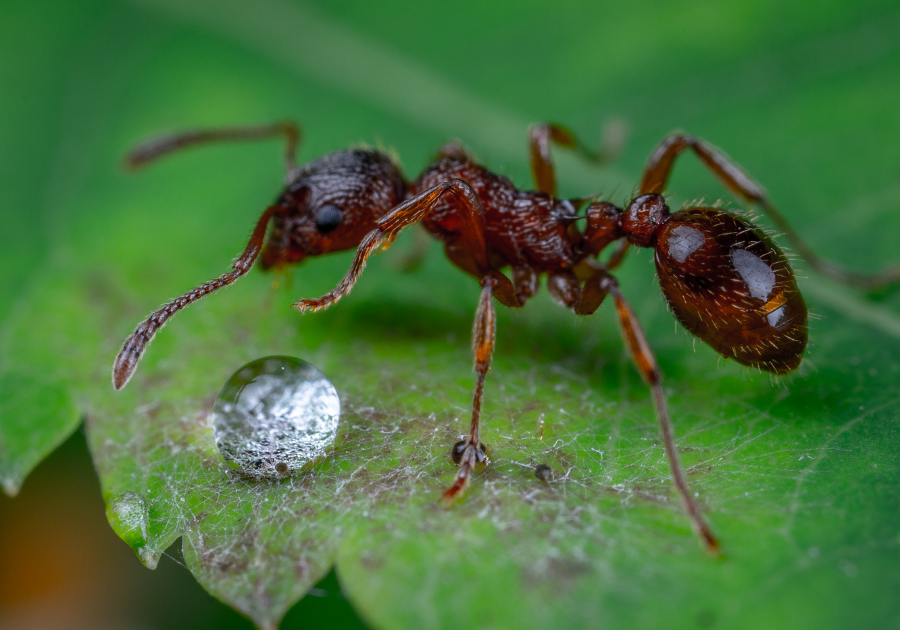
Why choose Bug Off Pest for ant control
We identify the species before we treat, we bait rather than only spray, and we tell you what actually attracted them so the problem does not simply come back in six weeks. Our technicians are FDACS-licensed and fully insured, and treatments are selected to be safe around children and pets once dry.
- Species identified before treatment
- Colony-level baiting, not just surface spraying
- Safe around children and pets
Frequently asked questions
Why do the ants keep coming back after I spray them?
Because spraying kills foragers, not the colony, and with ghost ants and several other local species it triggers budding: the colony splits and establishes new nest sites away from the disturbance. That is why a can of store spray often turns one trail into three. Baiting works because the workers carry it home.
How do I tell flying ants from termite swarmers?
That depends on the species and the extent. Subterranean termites are treated at the soil, never by tenting. Contained drywood infestations can often be handled with localized treatment. Widespread drywood infestation through a structure is where whole-structure fumigation gets discussed. The inspection determines which situation you are in.
Are ant treatments safe around pets and children?
Yes, applied correctly and to label. Baits are placed where pets and children cannot reach them, and exterior applications are safe once dry. Your technician will tell you the re-entry window before leaving.
How do you get rid of fire ants in a lawn?
Individual mound treatment for what is visible, plus broadcast treatment where the pressure across the lawn justifies it. Mound-by-mound treatment alone rarely holds, because unseen colonies keep moving in from surrounding ground.
Do carpenter ants mean I have a moisture problem?
Often, yes. They nest in wood that is already damp or decaying rather than sound timber, so finding them can point to a leak, poor drainage, or wood in soil contact. We treat the ants and tell you where the moisture is, because fixing only one of the two gets you a repeat visit.