Termite Control
Explore Our Services
Let's Get Started
- Mon - Sat: 8:00 AM - 5:00 PM
- Parada St, Punta Gorda, FL 33982
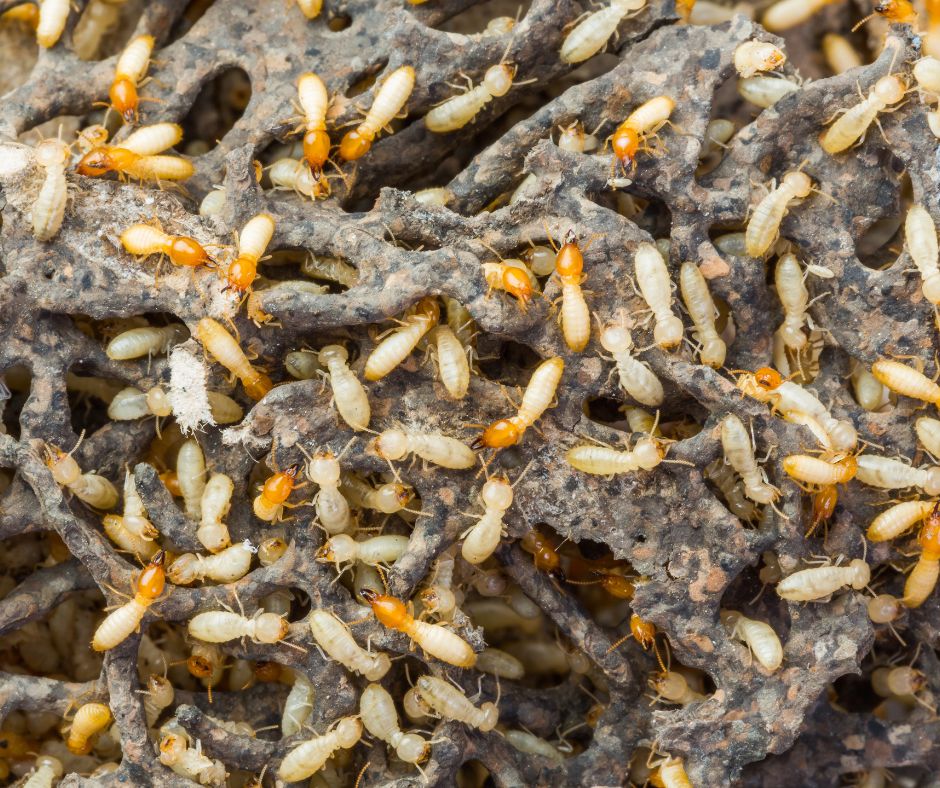
Termites are the one pest in Florida that can cost you a structure. They work out of sight, inside walls and under slabs, and by the time the damage is visible it has usually been developing for years. That is what makes them different from every other pest we treat: with roaches or ants you have a problem, with termites you have a countdown.
Bug Off Pest has treated termites across Charlotte, Sarasota, Lee and DeSoto counties since 2019. Every job starts with a free inspection so we can identify which species you have, how far it has spread and what it will actually take to stop it. You get the findings and the price before anything is treated.
Understanding termite infestations in Southwest Florida
Two kinds of termites matter here, and they need completely different treatments.
Subterranean termites live in the soil and come up into your home through the foundation. They need constant moisture contact with the ground, so they build mud tubes up walls, piers and slab edges to stay connected to it. Southwest Florida gives them close to ideal conditions: warm soil, high water table and a lot of homes built slab-on-grade. Formosan subterranean termites, an invasive species now established in parts of Florida, build far larger colonies than the native Eastern subterranean and do damage considerably faster.
Drywood termites need no soil contact at all. They live entirely inside the wood they are eating, which means they can infest a second-floor window frame, a roof truss or a piece of furniture with no connection to the ground. They are common in coastal Southwest Florida and they are the reason a home can be termite-free at the slab and still have an active infestation upstairs.
Both stay active year round here. There is no winter dormancy to interrupt a colony, which is why an infestation left alone does not pause, it compounds.
Signs you may have termites
Mud tubes on foundations or walls
Pencil-width earth tubes running up a foundation, pier or slab edge. This is the clearest sign of subterranean termites and it means an active connection between soil and structure.
Frass pellets near woodwork
Small, hard, six-sided pellets that look like coarse sand or coffee grounds, usually piled below a tiny hole. This is drywood termite droppings and it means the colony is inside that wood.
Discarded wings on sills and floors
After a swarm, reproductive termites shed their wings in piles near windows, doors and light fixtures. Swarmers indoors mean a colony is already established, not arriving.
Hollow wood, blistered paint, sticking doors
Wood that sounds hollow when tapped, paint that bubbles or blisters, and doors or windows that suddenly stick are all signs of damage beneath the surface.
Our termite treatment process
Our termite work is built around identifying the species correctly before choosing a treatment, because a subterranean treatment does nothing for drywood termites and the reverse is equally true.
Free Inspection
A licensed technician inspects the structure inside and out: foundation and slab edges, crawl spaces where present, attic and roof framing, window and door frames, and any wood in soil contact. We identify the species, map the extent, and note the moisture conditions supporting the colony.
Treatment Plan
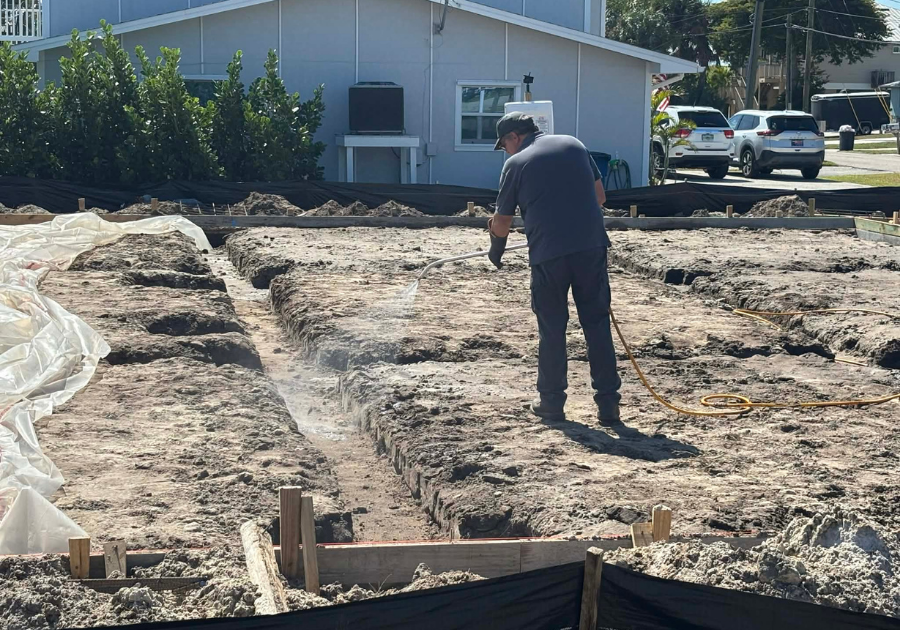
We show you what we found and explain the options for that species. Subterranean infestations are treated with a liquid termiticide soil barrier, an in-ground baiting system, or both. Drywood infestations are treated with localized wood treatment where the colony is contained, or a whole-structure approach where it is not. You get the price before work begins.
Treatment & Monitoring
We carry out the treatment and, on baiting and ongoing programs, return on schedule to inspect the stations and the structure. Termite protection is not a single event, and any company telling you otherwise is selling you a one-time fix for a permanent risk.
Why choose Bug Off Pest for termite control
We are FDACS-licensed, fully insured, and members of the Florida Home Builders Association, the National Association of Home Builders and the Charlotte-DeSoto Building Industry Association. That last part matters more than it sounds: builder association work means we handle new construction termite pretreatment, not just reactive treatment on homes that already have a problem.
We also inspect free and quote before we treat. Termite work is expensive enough that you should know what you are buying, from someone who has shown you the evidence first.
- Free inspection with species identification
- Subterranean and drywood treatment options
- New construction pretreatment available
Frequently asked questions
How much does termite treatment cost in Southwest Florida?
It depends on the species, the size of the structure and how far the infestation has spread, which is why we inspect before quoting. The inspection is free and you get a firm price before any work starts. We do not give phone estimates on termite work because they are almost always wrong.
Do I need tenting, or can it be treated without?
That depends on the species and the extent. Subterranean termites are treated at the soil, never by tenting. Contained drywood infestations can often be handled with localized treatment. Widespread drywood infestation through a structure is where whole-structure fumigation gets discussed. The inspection determines which situation you are in.
How often should my home be inspected for termites?
Annually is sensible for most Southwest Florida homes, and worth it on any older block-on-slab property or anything near water. Termite damage develops out of sight, so the value of an inspection is catching it in year one rather than year six.
Do you provide WDO inspections for a home sale or refinance?
Yes. Wood Destroying Organism inspections and reports are commonly required for real estate transactions and lending in Florida. Call us with your closing date and we will tell you honestly whether we can meet it.
Does new construction need termite treatment?
Yes, and Florida requires termite protection on new construction. Soil pretreatment during the build is by a wide margin the cheapest termite protection you will ever buy, and we handle pretreatment for builders across our service area.