How to get rid of mosquitoes in your yard, in order: empty the containers breeding them, then treat the shaded foliage they rest in. It is harder here than in most of the country because the season never really ends, the wet season reloads the population after every heavy rain, and a lot of properties sit beside canal, mangrove or preserve land that nobody can treat. What works is a two-part approach: remove every container of standing water on your own property, which is where your mosquitoes are actually bred, and treat the shaded foliage where adults rest during the day. County spraying targets adults in flight on a schedule and cannot reach either of those.
Everyone who moves here learns the same thing in their first August. You can do everything right in the yard and still get bitten the moment you step outside at dusk.
There are specific reasons for that, and some of them you can fix in an afternoon.
Why is the mosquito problem worse here?
Four things stack up, and Charlotte County has all four.
- No real winter. Breeding slows in the cooler months but it does not stop. Most of the country gets a freeze that resets the population every year. We do not, so the population carries over.
- The wet season reloads it. Mosquito eggs of several local species sit dormant in dry depressions and hatch when water arrives. A single heavy rain can produce an enormous hatch about a week later, which is why the bad weeks follow storms rather than tracking the calendar.
- Permanent habitat next door. Canals, mangrove, retention ponds, drainage ditches, preserve and pasture all hold water nobody treats. If you are in Punta Gorda Isles, on a canal, or backing onto preserve, your neighbors are a breeding ground.
- Salt marsh species travel. Some of our worst biters breed in coastal marsh and fly considerable distances inland. Those mosquitoes were never bred anywhere near your yard, which is why a perfectly clean property still has them.
That last point is the one that frustrates people most, and it is also the reason yard work alone is never the whole answer here.
How to get rid of mosquitoes in your yard: start with the water
Mostly from containers you have stopped noticing. Many common species breed in a startlingly small amount of water, and a bottle cap’s worth is enough for some.
Walk the property and empty or remove these:
- Plant pot saucers, which are the single most common source in Florida yards
- Bromeliads, which hold water in the center of the plant and need flushing weekly
- Clogged gutters and downspout splash blocks
- Tarps, boat covers and grill covers holding pockets of water
- Unused birdbaths, pet bowls left outside, kids’ toys, wheelbarrows
- Corrugated drain pipe with a low spot in it
- Irrigation valve boxes that hold water
- Tree holes and the hollow tops of cut palm stumps
- Air conditioning condensate pans and drip areas
- Any boat, kayak or trailer holding rainwater
Do this once properly and then once a week. Weekly matters because the egg-to-adult cycle in our heat can complete in about a week, so anything you empty every seven days never produces a mosquito.
Water you cannot drain, like an ornamental pond or a rain barrel, can be handled with mosquito dunks, a biological larvicide safe for fish, pets and wildlife.
Why does the county truck not fix it?
Charlotte County mosquito control does useful work, and it is not a substitute for anything happening on your own property. Two reasons.
Truck-mounted spraying puts a fine mist into the air to kill adult mosquitoes that are flying at that moment, on a route and a schedule. It does not treat the shaded resting places in your landscaping, and it does nothing to larvae in the saucer under your potted hibiscus.
It also cannot reach where you actually are. The spray travels from the road, so the back of a property, a screened lanai, a courtyard or anywhere shielded by a fence or dense planting gets little of it.
So the county reduces the general population. Your yard needs its own answer, and that is the gap private treatment fills.
What does professional treatment actually do?
The part people find counterintuitive is that effective treatment is not aimed at mosquitoes in flight. It is aimed at where they spend the day.
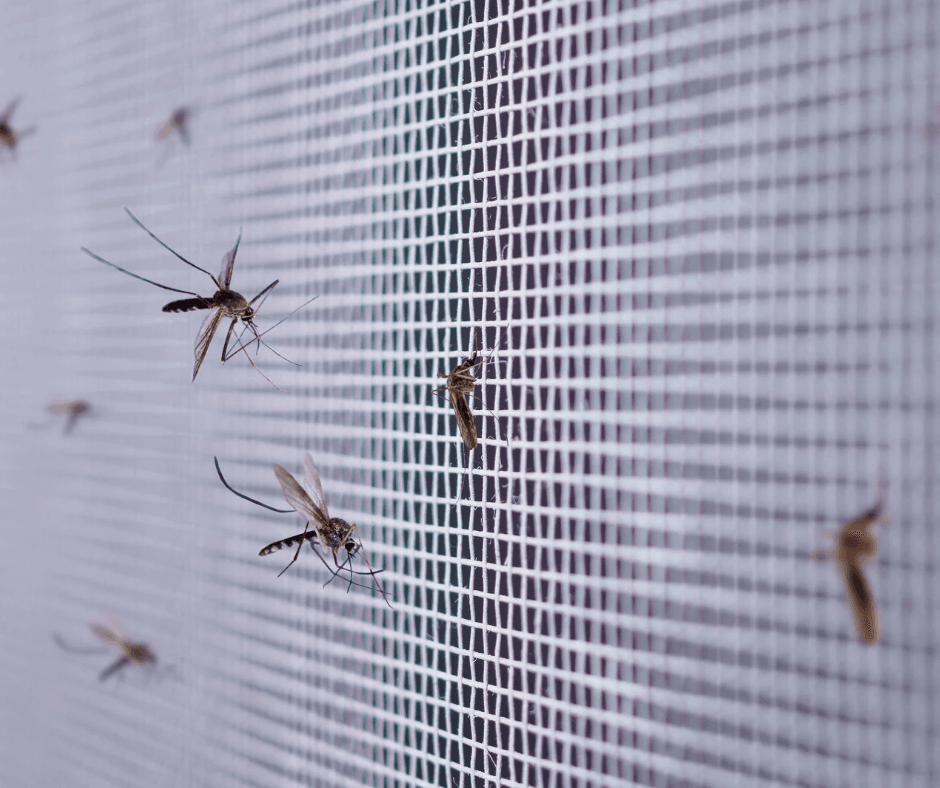
Mosquitoes are not flying most of the time. They rest in cool, dark, humid places: the undersides of leaves, dense shrubs, the shaded side of a fence, ground cover, under the deck, behind the air conditioning unit. A barrier treatment coats exactly those surfaces, so mosquitoes land on a treated surface at some point during the day whether or not they ever meet the technician.
That is why our mosquito control runs on roughly a 21-day cycle. The residual holds for about three weeks before it needs renewing, and it covers the whole treated yard rather than one zone.
For a specific space you use constantly, a misting system adds automated bursts around a lanai, pool deck or barn, which is the stronger option when the breeding source is on land you do not own.
What about the things people try first?
Worth doing, with realistic expectations:
- Fans on the lanai. Genuinely effective. Mosquitoes are weak fliers and moving air keeps them off you.
- Long sleeves at dusk and dawn. Simple and it works.
- EPA-registered repellent with DEET, picaridin or oil of lemon eucalyptus. The only personal protection with good evidence behind it.
Not worth your money:
- Bug zappers. Studies find the overwhelming majority of what they kill is harmless insects, not mosquitoes.
- Citronella candles and tiki torches. A very small effect in still air, none in a breeze.
- Ultrasonic repellers, whether a device or a phone app. There is no credible evidence they do anything.
- Bat houses and purple martins. Lovely to have, negligible as mosquito control. Mosquitoes are a tiny fraction of their diet.
When to call
When you have cleared the standing water and still cannot use the yard at dusk, when you are on water or backing onto preserve, or when the bad weeks after every storm have made the outdoor space pointless.
Frequently asked questions
How much does yard mosquito treatment cost?
It depends on the size of the yard and how much shaded foliage there is to treat, so a real number comes after someone has walked the property. The inspection is free, and you get the price before any treatment happens.
How long does a mosquito treatment last?
A barrier treatment holds about 21 days, which is why ongoing service runs on roughly that cycle. Heavy rain shortly after application can shorten it.
Is mosquito spray safe for kids and pets?
Standard practice is to stay off treated areas until they are dry, usually around half an hour, after which normal use resumes. Tell the technician about vegetable beds, ponds with fish and beehives so those get avoided.
When is mosquito season in Punta Gorda?
Effectively year-round, with the heaviest pressure from roughly May into October alongside the wet season. Populations spike about a week after each significant rain.
Will treating my yard help if my neighbor does nothing?
Yes, though less than if you both treated. Barrier treatment works on your property’s resting sites, so it keeps working regardless. Mosquitoes arriving from next door or from marsh will still arrive, which is the ceiling on what any single yard can achieve.
Do mosquito dunks really work?
Yes, for standing water you cannot drain. They contain a bacterium that kills mosquito larvae specifically and is safe for fish, pets, birds and people.
Why do I get bitten more than everyone else?
Mosquito attraction varies genuinely between people based on carbon dioxide output, skin chemistry and body heat. It is not imagined, and it is not something treatment changes, which is why repellent still matters.
Stopped using your own yard? Bug Off Pest provides mosquito control on about a 21-day cycle and installs misting systems across Punta Gorda, Port Charlotte and Charlotte, Sarasota, Lee and DeSoto counties. The free inspection includes walking your property for breeding sources, which is usually where the surprise is. Call (941) 676-2005.