Summer in Port Charlotte runs on a simple recipe: 90-degree days, an afternoon storm, and a night that never really cools off. It’s the recipe people move here for, and it’s also the recipe every insect in Southwest Florida breeds by. We treat homes here all year, and our call log tells the same story every June through September – the common bugs in Port Charlotte don’t change much from summer to summer, but where they show up on your property is very predictable once you know their habits.
The most common bugs found in Port Charlotte each summer are palmetto bugs (American cockroaches), mosquitoes and no-see-ums, fire ants, ghost and big-headed ants, and spiders around pool cages – with German cockroaches, fleas, and drywood termite swarmers close behind. Heat, humidity, and the canal system drive all of them toward homes.
The common bugs found in Port Charlotte, shift by shift
| Bug | Where it shows up | Peak |
|---|---|---|
| Palmetto bug | Kitchen at midnight, lanai, garage | June–Sept, after storms |
| Mosquitoes / no-see-ums | Yard at dusk, canal-front lots | All summer, worst after rain |
| Fire ants | Lawn mounds, sidewalk edges, A/C pads | Explodes after every rain |
| Ghost & big-headed ants | Kitchen counters; dirt piles at the slab | Steady, spikes in wet weeks |
| Spiders & webs | Pool cage frame, soffits, dock lights | Builds all summer |
| German cockroach | Indoors only – kitchens, appliances | Year-round, breeds faster in heat |
| Fleas | Shaded, sandy yard spots; pets | July–Oct |
The night shift: palmetto bugs
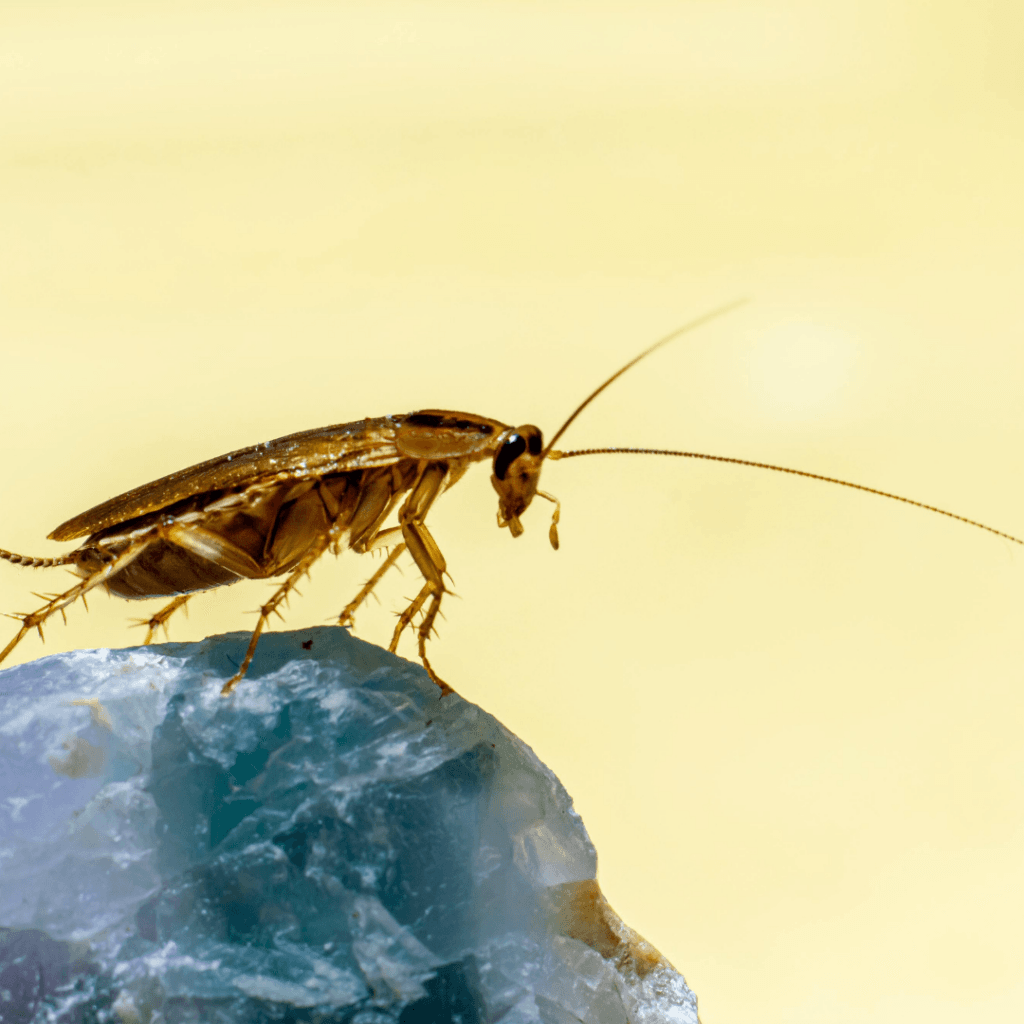
The two-inch roach that owns Port Charlotte summers is the American cockroach, and around here it mostly lives outdoors – in palms, mulch, water meter boxes, and the storm drains under our streets. Summer pushes it inside two ways: dry stretches send it hunting for water, and heavy rain floods it out of the ground. Homes built in the 70s and 80s, which is much of Port Charlotte, give it easy doors – worn garage seals and settled soffit gaps top the list. One at midnight is a visitor; a steady stream means an entry point worth sealing. We wrote a full guide on getting rid of palmetto bugs, and one warning belongs here: if the roaches you’re seeing are small, tan, and near the coffee maker, that’s a German cockroach and a different problem entirely.
The dusk shift: mosquitoes and no-see-ums
Port Charlotte’s canal system is wonderful for boats and equally wonderful for mosquito larvae. Add bromeliads, plant saucers, boat covers, and clogged gutters, and most yards raise their own supply without any help from the canals. Waterfront lots also get no-see-ums drifting off Charlotte Harbor’s mangroves at dawn and dusk – the tiny biters that fit through standard window screens. Dumping standing water weekly is the free half of the fix; a treatment plan or misting system is the reliable half. Our mosquito control service handles both approaches, and canal-front homes are exactly who it earns its keep for.
The lawn shift: fire ants and their quieter cousins
Watch any Port Charlotte lawn the week after a big summer rain and the fire ant mounds pop up like mushrooms – rain pushes colonies up out of saturated soil. Kids, dogs, and bare feet find them the hard way. Mound-by-mound DIY treatments mostly relocate colonies; broadcast baiting across the whole yard is what actually clears them. Meanwhile the quieter ants do summer damage indoors: ghost ants trail to kitchen sinks and big-headed ants pile foamy dirt at slab cracks and lanai pavers. Each species needs a different fix, which is why the spray-what-you-see approach usually backfires – repellent sprays split ghost ant colonies into several new ones.
The pool cage shift: spiders and their webs
Every screened cage in Port Charlotte becomes a spider buffet by August – the screen collects flying insects, the frame offers anchor points, and the pool light runs the bait station all night. Most of what you’ll see is harmless orb weavers doing free pest control. The two to respect are widows: brown widows love the frame channels and furniture undersides. Knock down webs with a pole brush regularly, and have the cage de-webbed and treated as part of regular service. If you’re seeing egg sacs that look like spiky little sea mines, that’s a brown widow – treat with more care.
The ones that aren't "summer bugs" but act like it
Three more earn a mention because summer accelerates them. German cockroaches breed faster in the heat and ride in on grocery bags and cardboard – they never wander in from the yard. Fleas boom from July on, in shaded sandy spots where pets and wildlife overlap. And drywood termite swarmers fly on warm evenings early in the season; wings on a windowsill deserve an inspection no matter what month it is. The UF/IFAS Extension has good photo keys if you want to identify something before deciding how hard to respond.
Keeping your summer bug-light
Three habits cover most of it: manage water (dump anything that holds it, fix the dripping hose bib, don’t irrigate against the slab), close the doors (garage door seal, soffit gaps, caulk around pipe penetrations), and cut the buffet (pet food up overnight, lidded trash, palms trimmed off the roof). A quarterly perimeter treatment layers on top of those habits and intercepts the common bugs found in Port Charlotte before they reach the gaps – it’s the difference between a bug-light summer and a summer of one-off emergencies.
If something’s already moved in, we’ll tell you exactly what it is and what fixing it costs before we treat anything. Free inspections on every property, FDACS-licensed technicians, and we’ve served Port Charlotte and the rest of Charlotte County since 2019. (941) 676-2005.
What Port Charlotte homeowners ask us
Why are there suddenly so many bugs in my house this summer?
Blame the weather cycle, not your housekeeping. Heat and drought push pests indoors for water; storms flood them out of the ground and indoors for shelter. A clean house with an unsealed garage door still gets summer visitors.
What are the tiny biting bugs at dusk that get through my screens?
No-see-ums (biting midges), breeding in the mangroves and wet soil around Charlotte Harbor. Standard screens can’t stop them; 20-mesh screening, fans on the lanai, and timing your evenings away from dawn/dusk peaks are what actually help.
Do the canals make bug problems worse?
For mosquitoes, no-see-ums, and roof rats, yes – waterfront lots carry measurably more pressure than inland ones. The same house two streets off the water often needs a lighter treatment schedule.
When should summer pest treatment start?
Late May or early June, before the rain pattern locks in. Treating after the first big storm wave means starting from behind; the perimeter barrier works best when it’s down before pests start moving.