Florida pest identification guide
Found something and want to know what it is before you call anyone. That is what this is for.
Below are the pests we actually get called about across Charlotte, Sarasota, Lee and DeSoto counties, with what each one looks like, where it turns up, and whether it is a problem or just unwelcome. Some of these need treatment. Several do not, and we will say so.
Pests you find indoors
Palmetto bugs
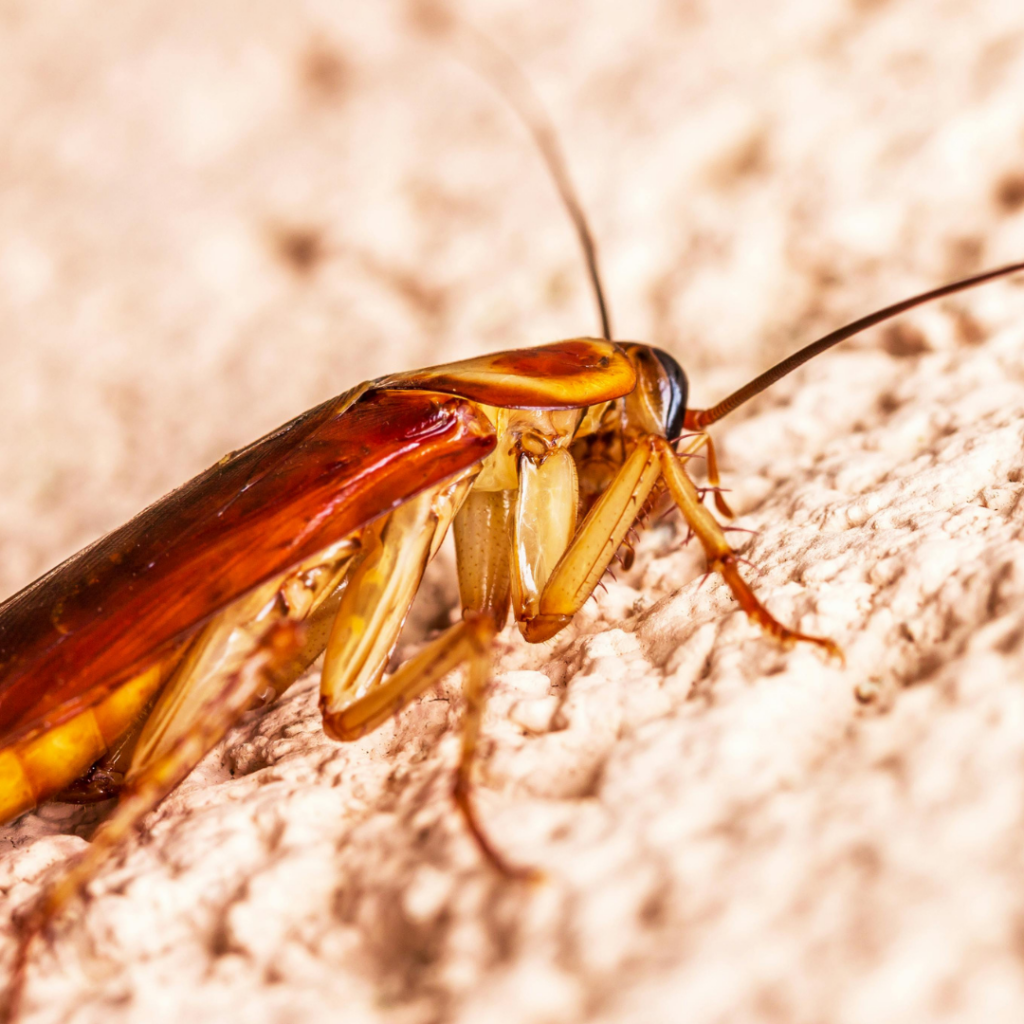
Large, an inch and a half or more, reddish-brown, and they fly. You see one or two at a time, usually at night, in a garage, bathroom or lanai. They live outdoors in mulch, palms, tree holes and drain lines and come in through weep holes, soffit gaps and around plumbing, especially in heavy rain or drought. A few in a season is normal in Florida. A steady stream means there is harbourage close to the house.
German cockroaches
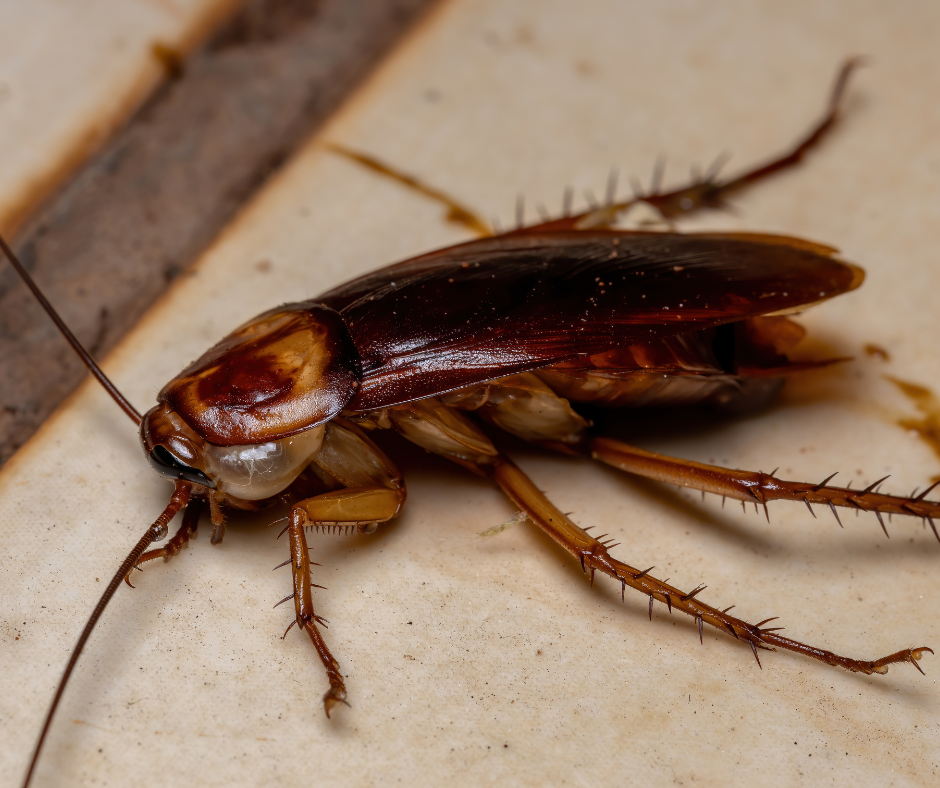
Small, about half an inch, tan with two dark stripes running behind the head. Completely different animal from a palmetto bug: these live indoors, breed in your kitchen and bathroom, and hide inside appliance housings, cabinet voids and under sinks. They arrive in cardboard, grocery bags and second-hand appliances. Seeing one in daylight usually means a substantial population you have not seen.
Ghost ants
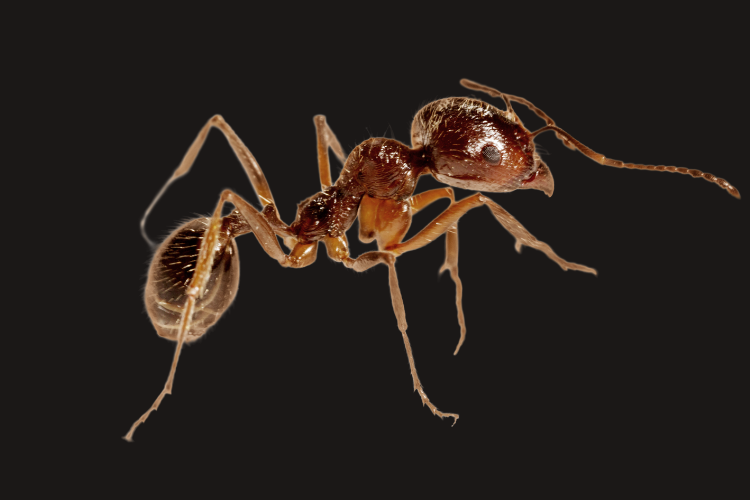
Very small, with a dark head and thorax and pale, almost translucent legs and abdomen. Trails along counter edges, sink cabinets and bathroom surfaces, heading for moisture. Spraying the trail makes it worse, because the colony splits and relocates rather than dying.
Silverfish
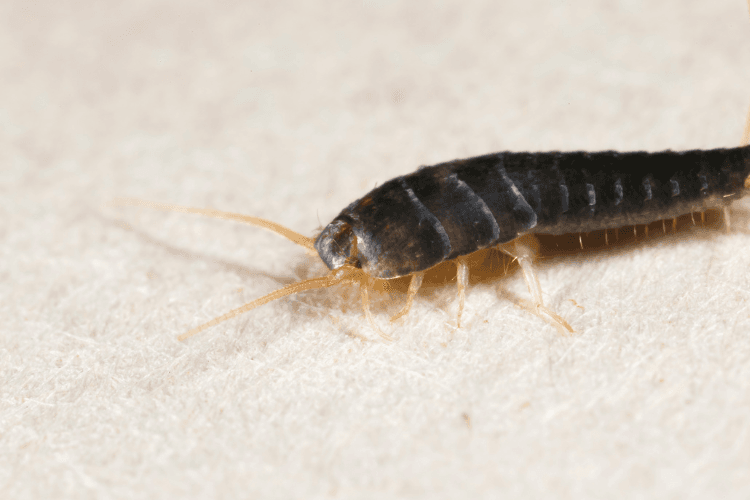
Teardrop-shaped, silver-grey, about half an inch, moving in a quick wriggling motion. They want humidity, so they turn up in bathrooms, laundry rooms, under sinks and inside cardboard stored in a garage. They feed on paper, glue and starches. More a moisture problem than a pest problem, and swapping cardboard for plastic bins fixes a lot of it.
Bed bugs
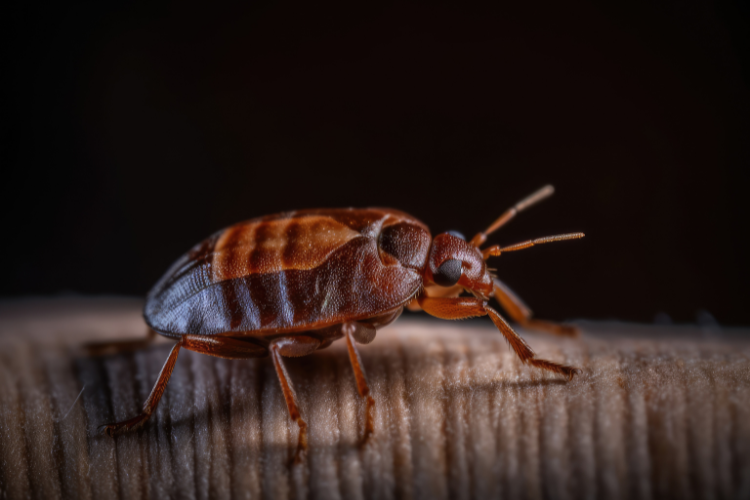
Adults about the size and colour of an apple seed, flat and oval. You are more likely to find the evidence than the insect: dark faecal spotting along mattress piping and box spring seams, small rust-coloured smears on bedding, and translucent shed skins in crevices. They have nothing to do with how clean your home is.
Pests that damage the building
Subterranean termites
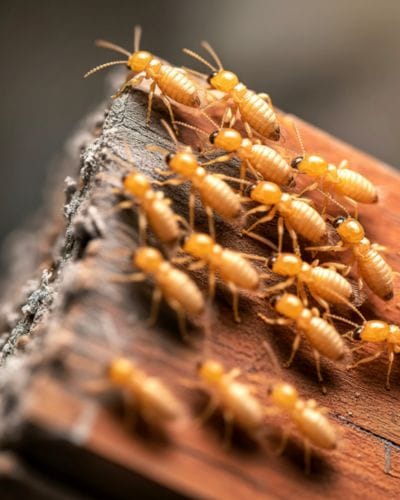
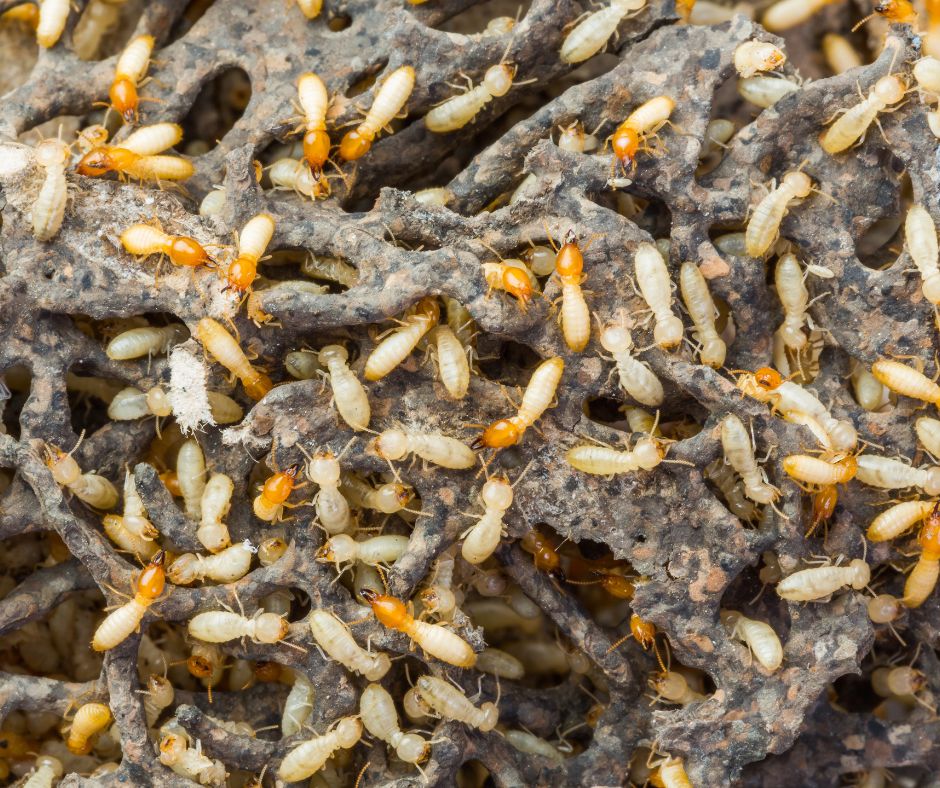
You will rarely see the insect. You will see pencil-width mud tubes running up a foundation, pier or slab edge, connecting soil to structure. Also hollow-sounding wood, blistered paint and doors that suddenly stick. They need constant soil moisture, which is why canal-front and waterfront homes carry more pressure.
Drywood termites
No soil contact at all, which means they can infest a second-floor window frame or roof truss with nothing connecting them to the ground. The sign is frass: small, hard, six-sided pellets that look like coarse sand or coffee grounds, piled below a tiny hole. Common in coastal Southwest Florida and in older wood-frame housing.
Roof rats
Carpenter ants
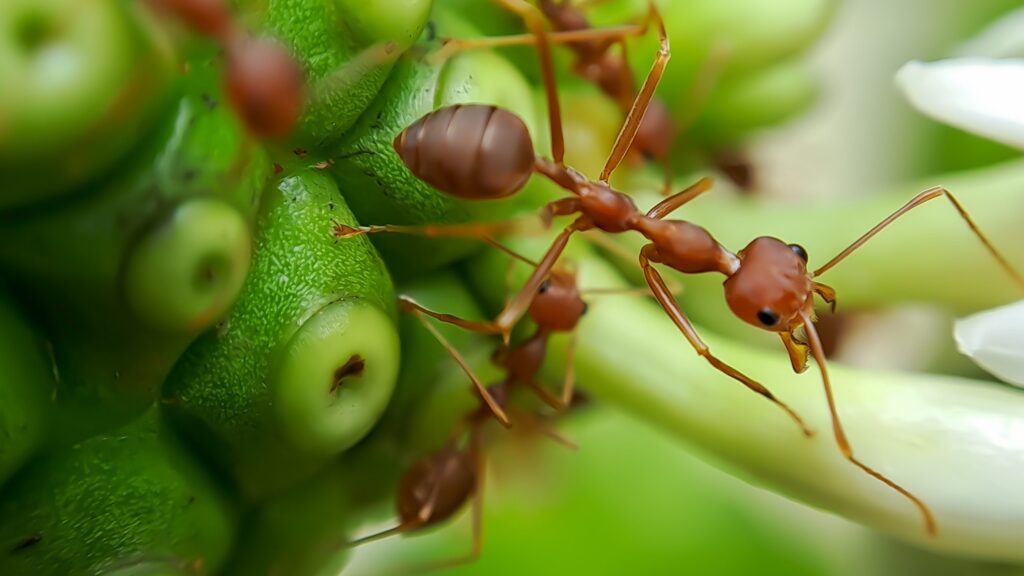
Large, often bicoloured red and black. They hollow out wood to nest in it rather than eating it, and they target wood that is already damp or damaged. Finding them is worth investigating twice: once for the ants, and once for the leak or drainage problem that attracted them.
Pests in the yard, lanai and pool cage
Mosquitoes
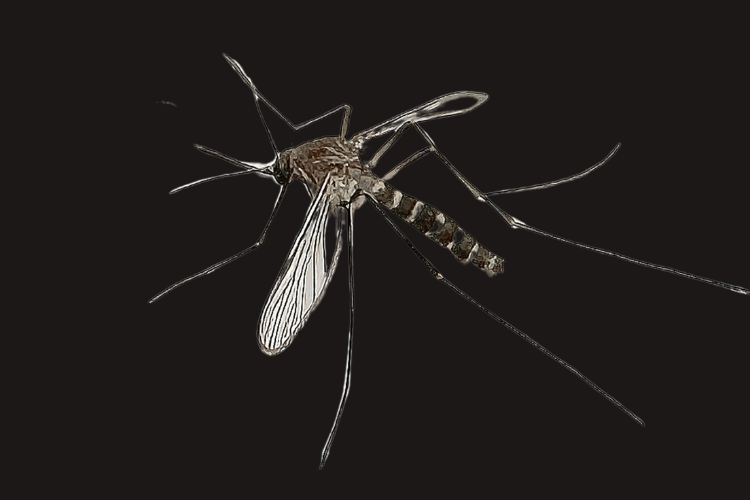
The container-breeding species that dominate residential Southwest Florida rarely travel more than a couple of hundred yards from where they hatched, which means they usually came from your own property. Check bromeliads first — they hold water in the leaf axils by design and almost nobody counts them as standing water. Then plant saucers, gutters and irrigation boxes.
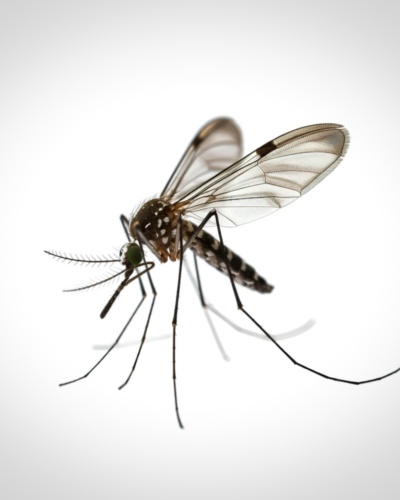
Biting midges (no-see-ums)
Almost too small to see, and they bite hard around dawn and dusk. They breed in wet muck and mud at the edges of water, and they pass straight through standard screen mesh, which is why an enclosure alone never solves it. Worst near mangrove, marsh and river edges.
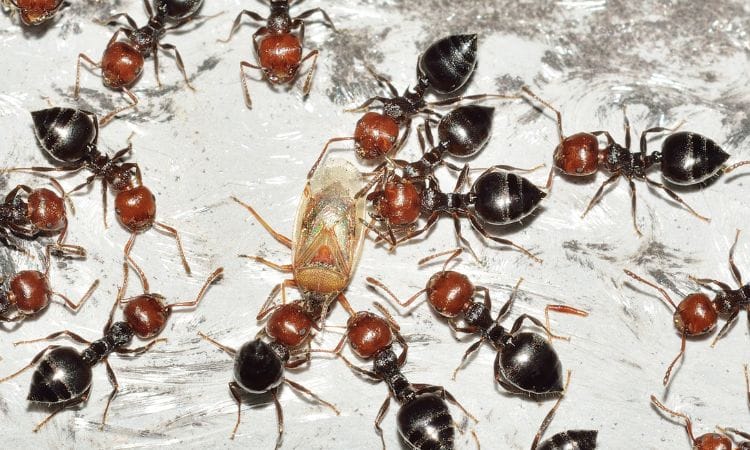
Fire ants
Loose, domed mounds of fine soil with no visible opening on top, in open sunny ground. Disturb one and they pour out within seconds. A genuine hazard around children, pets and livestock, and they colonise new sod and disturbed soil fast.
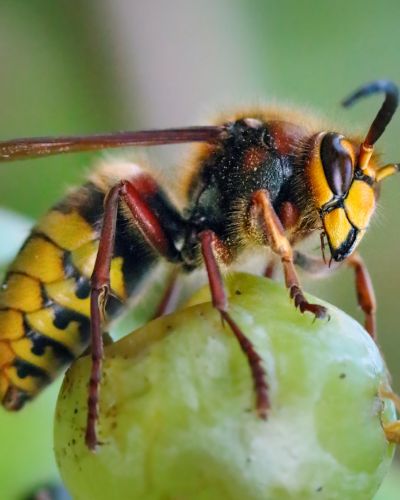
Paper wasps
Open, umbrella-shaped grey comb with visible cells, hanging from a short stalk. Sheltered corners: eaves, soffits, screen enclosure and pool cage corners, inside grills, in mailboxes. Not especially aggressive until the nest is disturbed, at which point they defend it hard.
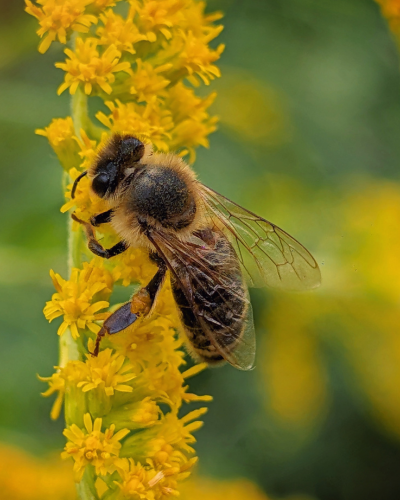
Honey bees
Fuzzy, rounded, golden-brown, and unlike wasps they will be entering and leaving one point in your structure in a steady stream. We never exterminate honey bees. They are removed alive, relocated, and the comb comes out with them so the wax and honey do not stay in your wall.
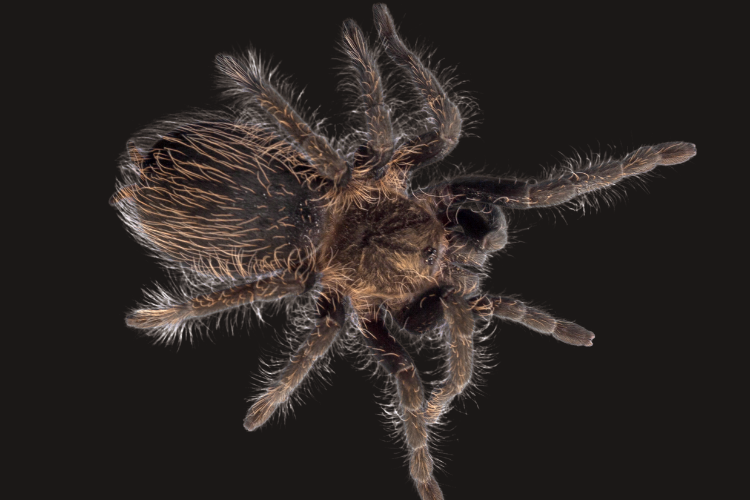
Widow spiders
Southern black widows are glossy black with a red hourglass underneath. Brown widows are mottled tan or grey with an orange hourglass, and across much of Southwest Florida they are now the more commonly encountered of the two. The clearest identifier is the egg sac: brown widow sacs are covered in small spiky projections. Garages, sheds, utility and irrigation boxes, under furniture.
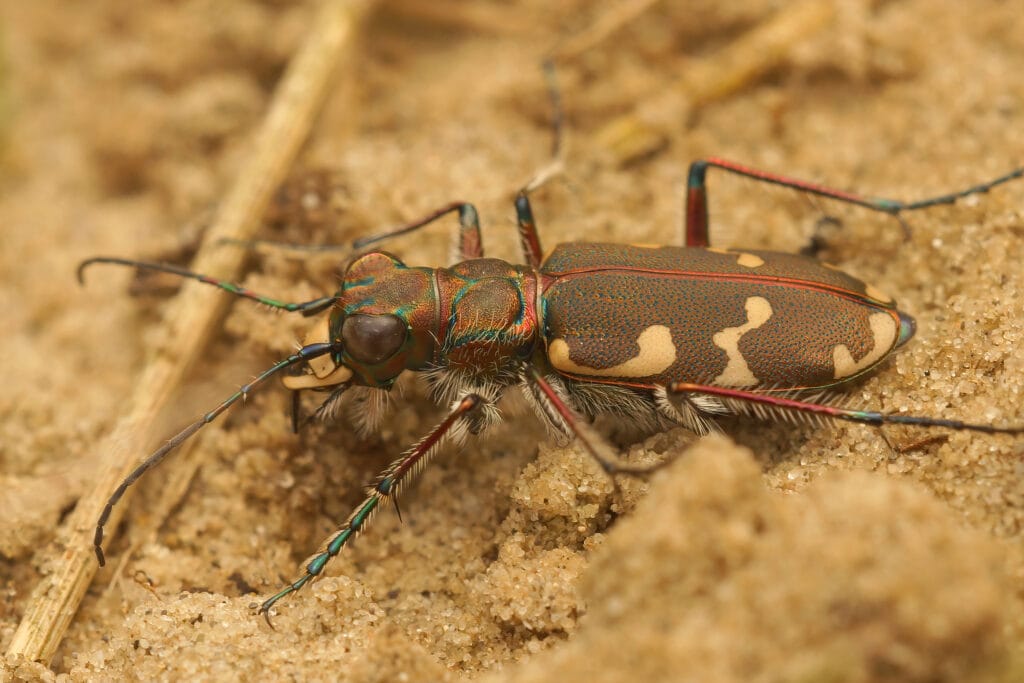
Chinch bugs
You will see the damage before the insect: irregular yellowing and browning in St. Augustine grass, usually starting along driveways, sidewalks and sunny edges. Pull back the turf at the edge of a brown patch and look at the soil surface. Frequently blamed on irrigation.
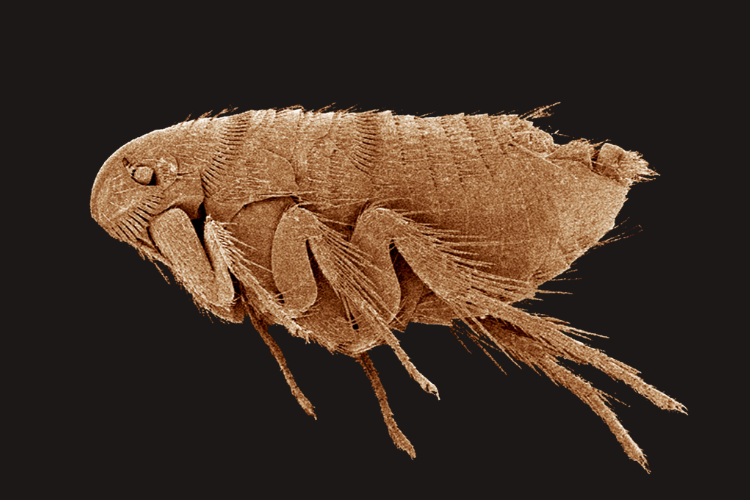
Fleas
The fleas on your pet are roughly five percent of the problem. The rest are eggs, larvae and pupae in carpet, pet bedding and shaded yard soil. Best home test: comb black specks from the coat onto a damp paper towel. If they smear rust red, that is digested blood.
Things you can generally leave alone
This section exists because half the calls we take are about something that does not need treating, and we would rather tell you that than sell you a service.
Mud daubers
build the finger-length mud tubes on walls and under overhangs. Solitary, they almost never sting, and they hunt spiders for a living.
Golden silk orb-weavers
The large yellow-and-black spiders stringing webs between trees, are alarming and completely harmless. So are spiny orb-weavers, the small white spiky ones, and jumping and huntsman spiders. All of them eat mosquitoes and flies for you.
Centipedes and millipedes
come indoors during heavy rain and leave again. Reducing moisture and sealing the perimeter handles it.
Earwigs
look worse than they are. The pincers are for other insects. They want damp, so they turn up in mulch, bathrooms and garages.
Brown recluse spiders are not established in Florida.
Isolated individuals arrive in shipped goods occasionally, but there is no resident population here, and most suspected recluse bites in this state turn out to be something else. Anyone quoting you for recluse treatment is selling you something you do not need.
Still not sure what you are looking at?
Send us a photo or bring us a jar. Identification is free, and so is the inspection if it turns out you need one. We will also tell you if you do not.