
Do mosquito misting systems work? Yes, with conditions. Nozzles mounted around the perimeter of an outdoor space release a fine insecticide mist on a timer or on demand, usually at dawn and dusk, and a well-designed system keeps a patio, lanai or barn area usable through mosquito season. It does not protect the whole property, it needs refilling and nozzle servicing to keep working, and it will not solve standing water on your land. Systems left unserviced are the main reason people say theirs stopped working.
Anyone who has tried to eat dinner outside in Punta Gorda in August has looked up misting systems afterwards. The honest answer is that they work well for the thing they are designed to do and badly for everything else, and most disappointment comes from buying one expecting the second.
Do mosquito misting systems work, and how?
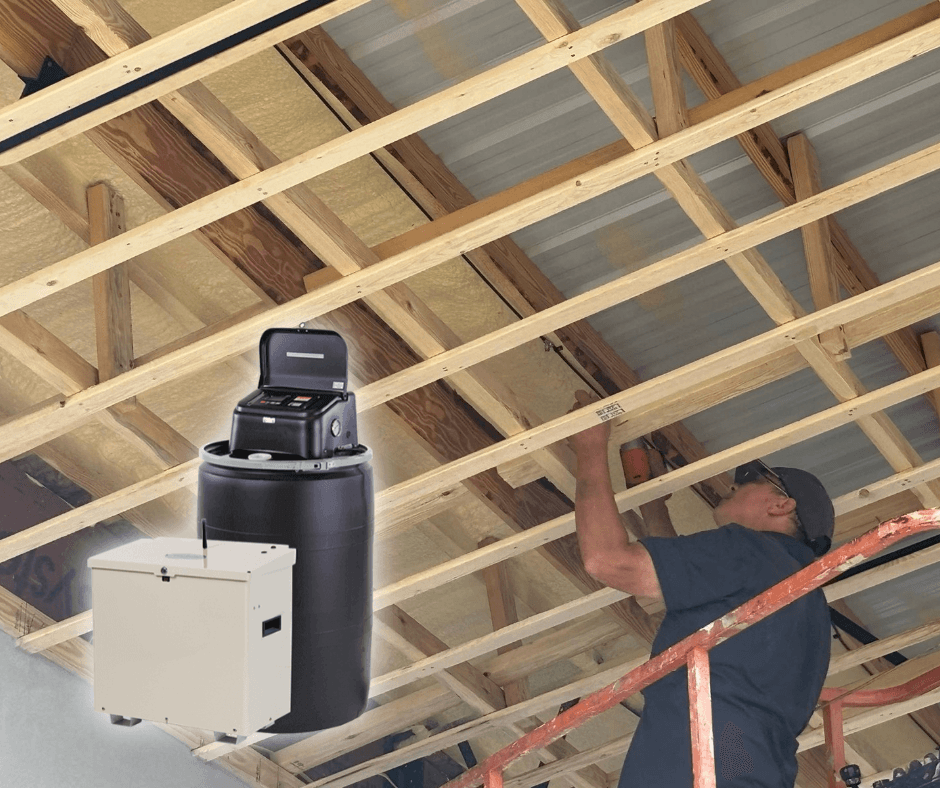
A loop of small-diameter tubing runs around the area you want protected, usually hidden in the soffit, fascia, fence line or landscaping. Nozzles are spaced along it, typically eight to ten feet apart. A reservoir and pump sit somewhere discreet, and a timer or remote triggers short bursts of fine mist.
The timing is the part that matters. Bursts are set for dawn and dusk because that is when the mosquitoes most people are fighting here are actively flying. A burst lasts under a minute, and the droplets are fine enough to contact insects in the air and settle on foliage where they rest.
Most systems also let you trigger a burst manually before you go outside, which in practice is what people use most.
What a mosquito misting system will and will not do
It will hold a defined outdoor area. A lanai, a pool deck, a patio, an outdoor kitchen, a barn aisle, a paddock gate area. Within that envelope the reduction is genuine and immediate, which is why restaurants and ranches use them.
It will not do these things, and no installer should tell you otherwise:
- Protect your whole yard. The system treats where the nozzles are. Walk fifty feet past the loop and you are back in the general population.
- Fix standing water. If there is a clogged gutter, a bromeliad holding water, an unused birdbath, a tarp or a low spot breeding thousands of mosquitoes, the mist treats the adults while the source keeps producing more.
- Work unserviced. The reservoir empties, nozzles clog with mineral deposits, and tubing can be cut by a landscaper. An unserviced system becomes decoration.
- Replace the rest of pest control. It targets flying insects in that space. It does nothing for ants, roaches or rodents.
A fifth one worth saying plainly: it is not a set-and-forget purchase. It is a piece of equipment with a consumable, more like irrigation than like a light fixture.
Misting system or barrier spray?
These are the two real options and they suit different situations.
Barrier treatment is a technician spraying the resting places where mosquitoes shelter during the day, meaning the undersides of foliage, dense shrubs, fence lines and shaded ground. It covers the whole treated yard rather than one zone, and it lasts about three weeks before it needs repeating. Our mosquito control runs on roughly a 21-day cycle for that reason.
A misting system is permanent equipment protecting a defined area on a schedule you control, with no technician visit needed for it to fire.
The practical split:
- You use one specific outdoor area constantly and want it reliably usable: misting system.
- You want the whole yard improved for kids and pets: barrier treatment.
- You have acreage, livestock or a barn where flies matter as much as mosquitoes: misting system, often alongside equine and livestock protection.
- You want the strongest result available: both, because they solve different halves.
Barrier treatment is also the easier thing to try first. It costs less to start and tells you how much of your problem is yard-wide versus concentrated.
What does a misting system cost?
Installation is priced by the size of the area and the number of nozzles, so an honest quote requires someone looking at the property. Anyone quoting a flat figure sight unseen is guessing.
The part people forget is the running cost. Refills and nozzle servicing are ongoing, and the frequency depends on how often the system fires and how large the reservoir is. Ask for the annual cost of refills and service alongside the installation price, because that is the real number. We install, service and refill, including for homes, ranches and barns.
Is a misting system safe around children and pets?
The products used are applied in very small quantities as a fine mist on a short cycle, which is why timing matters. Standard practice is to schedule bursts for dawn and dusk when people and pets are not usually in the space, and to keep them out of the area during a burst and briefly after.
Some sensible design rules: nozzles should not be aimed at vegetable beds, pet bowls, water features with fish, or an open outdoor kitchen surface. A competent installer plans the loop around those rather than through them.
If anyone in the household has a respiratory condition, say so before design rather than after, because it changes nozzle placement and scheduling.
Why Southwest Florida is a special case
Our mosquito season does not really end. Warmth and humidity keep breeding going most of the year, the wet season produces explosive population jumps after each heavy rain, and properties backing onto preserve, canal, mangrove or pasture sit next to permanent breeding habitat that nobody can treat.
That last point is the strongest argument for a misting system here. If the source is on land you do not own, source reduction is off the table and holding a defined space becomes the realistic goal.
There is also a local bonus. The same systems reduce biting midges, the insects most people here call no-see-ums, which barrier treatments handle less well because midges breed in damp soil and mud rather than standing water. Waterfront properties in Charlotte Harbor and Punta Gorda Isles feel that difference most.
When to call
When you have an outdoor space you have stopped using, when you are on or near water, when you have livestock, or when barrier treatments help but wear off before you want them to.
Frequently asked questions
How long does a mosquito misting system last?
The equipment lasts years with servicing. The effect of each burst lasts hours, which is why systems run on a schedule rather than continuously.
Do misting systems kill bees and butterflies?
They can affect any insect in the treated space, which is why placement and timing matter. Scheduling bursts for dawn and dusk avoids peak pollinator activity, and keeping nozzles away from flowering beds and vegetable gardens reduces it further. If you keep hives, say so at design stage.
Can I install a mosquito misting system myself?
Kits exist, but the two things that decide whether a system works are nozzle placement and correct product handling, and both are where self-installs fail. Applying insecticide through a permanent system also carries licensing requirements in Florida.
How often does the reservoir need refilling?
It depends on reservoir size and how often the system fires. That is a question to settle at quote time, because it is your actual yearly cost.
Will a misting system work on a windy day?
Less well. Fine mist disperses in wind, which is one reason dawn and dusk bursts are standard, since those are usually the calmest parts of the day.
Does a misting system help with flies in a barn?
Yes, and it is one of the better uses for one. Barn aisles and stalls are defined spaces with constant fly pressure, which is exactly what a nozzle loop handles well.
Want your lanai back? Bug Off Pest installs, services and refills mosquito misting systems for homes, ranches and barns in Punta Gorda, Port Charlotte and across Charlotte, Sarasota, Lee and DeSoto counties, and also runs barrier mosquito treatment on about a 21-day cycle. A free inspection tells you which of the two your property actually needs. Call (941) 676-2005.