Tick & Flea Control
Explore Our Services
Let's Get Started
- Mon - Sat: 8:00 AM - 5:00 PM
- Parada St, Punta Gorda, FL 33982
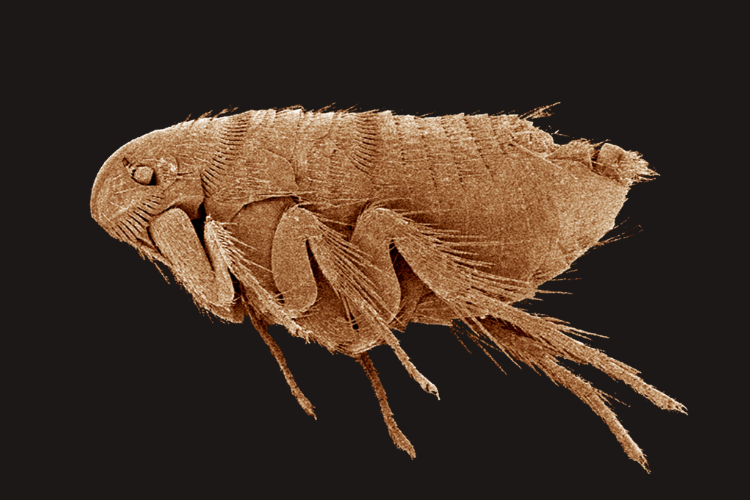
Here is the thing about fleas that catches nearly everyone out: the fleas on your pet are roughly five percent of the problem. The other ninety-five percent are eggs, larvae and pupae sitting in the carpet, the pet bedding and the shaded parts of your yard. Treat only what you can see and the rest hatches out behind you.
Florida makes this worse than most places. There is no winter here to break the cycle, so fleas and ticks stay active twelve months a year. Bug Off Pest treats the interior and the yard together across Charlotte, Sarasota, Lee and DeSoto counties, timed around the life cycle so the population does not simply rebuild.
Why fleas are so hard to get rid of
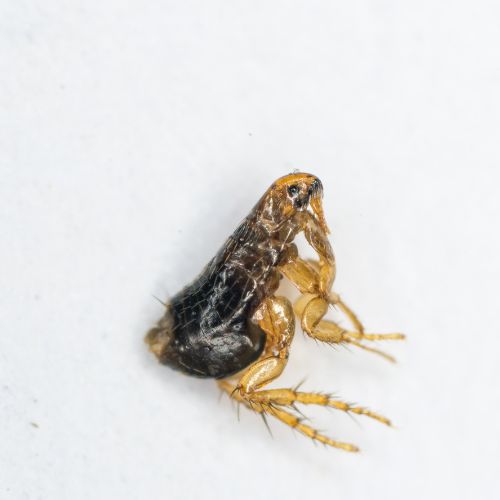
The cat flea is the species behind almost every flea problem in Florida, on cats and dogs alike. Adults feed and lay eggs on the animal, the eggs fall off wherever the pet goes, and they develop into larvae and then pupae in carpet fibres, upholstery, pet bedding and outdoor soil.
The pupal stage is what defeats most treatment. Inside its cocoon a developing flea is well protected from insecticide, and it can stay dormant for weeks waiting for a signal that a host has arrived: vibration, warmth, carbon dioxide. That is why fleas seem to reappear a week or two after a treatment that appeared to work. Nothing failed. Protected pupae simply hatched on schedule.
Outdoors, fleas do not develop in open sunny lawn. They concentrate in shaded, humid areas: under decks and porches, in crawl spaces, along fence lines and wherever your pet lies down. Wildlife keeps restocking those areas. Opossums, raccoons, feral cats and squirrels all carry fleas through Southwest Florida yards, which is why a treated yard with a wildlife route through it needs ongoing attention.
Ticks are a separate problem sharing the same treatment visit. Several species occur here, and the brown dog tick is worth knowing about specifically because it is the one that can complete its entire life cycle indoors. A brown dog tick problem in a home or kennel is an infestation, not a few hitchhikers off a walk.
Ticks can transmit disease to pets and people. If you find one attached, remove it promptly and speak to your vet or doctor about whether follow-up is warranted.
Signs you have fleas or ticks
Persistent scratching and hair loss
Especially around the base of the tail, the belly and behind the ears. Many pets develop sensitivity to flea saliva, so a small number of fleas can cause a disproportionate reaction.
Flea dirt in the coat
Black specks resembling ground pepper at the skin line. Comb some onto a damp paper towel: if it smears rust red, it is digested blood and you have fleas.
Bites around ankles and lower legs
Small itchy bites clustered low on the body, since fleas emerging from carpet do not travel far upward.
Ticks found on pets or in bedding
Check ears, neck, between toes and around the collar after outdoor time. Ticks appearing repeatedly indoors, particularly in a crate or bedding area, suggest an indoor population rather than outdoor pickup.
Our flea and tick treatment process
Inspection
A licensed technician identifies the affected areas indoors and locates the outdoor reservoirs: shaded beds, under decks and porches, crawl spaces, fence lines and pet resting spots. We also look for the wildlife routes restocking the yard, because treating a yard with an active opossum run through it is a temporary fix.
Interior & Exterior Treatment
We treat both together, since doing one without the other guarantees reinfestation. Interior work targets carpet, upholstery, pet bedding areas and baseboards, using products that address the developing stages rather than adults alone. Exterior work concentrates on the shaded, humid areas where larvae actually develop rather than blanket-spraying open lawn.
Follow-Up Through the Pupal Window
This is the step that decides the outcome. We schedule follow-up to catch fleas emerging from protected pupae after the first treatment. We also ask you to keep vacuuming, which physically removes eggs and larvae and prompts dormant pupae to emerge where treatment can reach them.
Why choose Bug Off Pest for flea and tick control
We treat the yard and the interior on the same job, we time follow-up around the pupal window instead of hoping one visit holds, and we tell you honestly that our work only sticks if your pet is being treated too. Our technicians are FDACS-licensed and fully insured, and applications are selected to be safe around pets and children once dry.
- Interior and yard treated together
- Follow-up timed to the flea life cycle
- Safe around pets and children once dry
Frequently asked questions
Why did the fleas come back a week after treatment?
Almost always the pupal window. Developing fleas inside cocoons are protected from insecticide and hatch days or weeks later when they sense warmth, vibration or carbon dioxide. It is not treatment failure, it is the life cycle, and it is exactly why follow-up is part of the plan rather than an upsell.
Do I need to treat my pet as well?
Yes, and this part is not optional. We treat the home and the yard, your vet treats the animal. If the pet is untreated it re-seeds the environment continuously and no amount of property treatment will hold. Talk to your vet about a year-round preventive, since Florida has no off-season.
What should I do before treatment?
Vacuum thoroughly, including under furniture and along baseboards, and empty the vacuum outside afterward. Wash pet bedding on the hottest setting the fabric allows. Clear floor space so treatment can reach carpet edges. Keep vacuuming every few days after treatment, since it helps rather than interferes.
Are the treatments safe for my pets?
Yes, applied correctly and to label. Pets should be out of treated areas until surfaces are dry, and your technician will give you the specific re-entry time before leaving. Fish tanks need covering and the pump switched off during interior treatment.
Can ticks live inside my house?
Most cannot, but the brown dog tick can complete its whole life cycle indoors, which is why they turn up repeatedly in homes and kennels with no obvious outdoor source. If you are finding ticks inside more than occasionally, that is worth an inspection rather than another spot treatment.