Wasp Control
Explore Our Services
Let's Get Started
- Mon - Sat: 8:00 AM - 5:00 PM
- Parada St, Punta Gorda, FL 33982
Wasps are the pest most likely to send someone to urgent care, and they build in exactly the places you use most: the corner of the pool cage, the eave above the front door, inside the grill, under the patio table.
The problem with handling it yourself is timing and position. Most people spray in the middle of the day, when a good share of the colony is out foraging, from directly underneath the nest. The foragers come back to a nest that has been disturbed but not eliminated, and they come back defensive.
Bug Off Pest removes wasp and yellowjacket nests across Charlotte, Sarasota, Lee and DeSoto counties, and treats the site so they do not rebuild in the same spot.
Not every stinging insect is the same problem
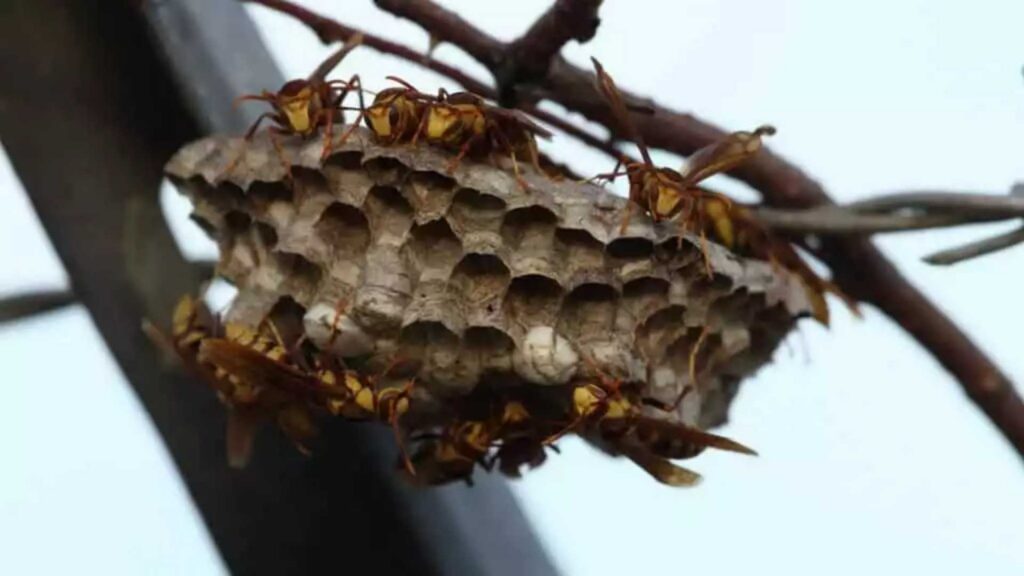
Paper wasps account for most residential calls here. They build open, umbrella-shaped comb hanging from a short stalk, and they favour sheltered spots: eave and soffit corners, the top corners of screen enclosures and pool cages, under patio furniture, inside grills, and in mailboxes and light fixtures. They are not especially aggressive until the nest is disturbed, at which point they defend it hard.
Yellowjackets are a more serious proposition. They nest in the ground, in wall voids and in other enclosed cavities, colonies get considerably larger than paper wasps, and they defend aggressively over a wider radius. They also scavenge at food and rubbish, so they turn up around bins, grills and pool areas. A yellowjacket nest inside a wall void is a job for someone with the right equipment, not a can from the hardware store.
Mud daubers build the mud tubes you see on walls, soffits and under overhangs. They are solitary, they very rarely sting, and they hunt spiders for a living. Most of the time these do not need removing at all, and we will tell you that rather than sell you a treatment.
Screen enclosures deserve a specific mention. Pool cages and lanais are prime wasp real estate in Southwest Florida: sheltered, dry, and full of protected corners. If you have an enclosure, that is where they will build.
Colonies stay active year round in this climate and are typically largest and most defensive in late summer and autumn. If you are allergic to stings, do not attempt removal yourself, and seek medical attention promptly if you are stung.
Signs you have a wasp nest
Umbrella-shaped comb in a sheltered corner
Grey papery comb with visible open cells hanging from a short stalk, usually in an eave, soffit or screen enclosure corner. This is a paper wasp nest.
Steady traffic to a hole or void
Wasps entering and leaving one point in the ground, a wall, a soffit or a utility box. Nothing visible from outside usually means a yellowjacket colony in a cavity, which can be considerably larger than it appears.
Wasps around bins, grills and pool areas
Scavenging behaviour around food and rubbish points to yellowjackets rather than paper wasps, and suggests a nest somewhere on or near the property.
Mud tubes on walls and overhangs
Finger-length tubes of dried mud. These are mud daubers, they are harmless, and they generally do not need treatment.
Our wasp control process
Identification & Location
Treatment & Removal
Site Treatment & Prevention
Removing a nest alone invites a rebuild, because wasps favour the same sheltered locations year after year. We treat the site to discourage re-establishment and identify the spots on your property most likely to be used next: enclosure corners, soffit gaps, unused light fixtures, open utility boxes.
Why choose Bug Off Pest for wasp control
We identify before we treat, which means honey bees get relocated rather than killed and harmless mud daubers get left alone. We handle void and ground nests properly rather than spraying an entrance and hoping. And we treat the site afterward, because a nest removed from a pool cage corner is a nest rebuilt in the same corner three weeks later.
- Correct identification, bees relocated not exterminated
- Void and ground nests treated at the source
- Site treated to prevent rebuilding
Frequently asked questions
Is it a wasp or a honey bee?
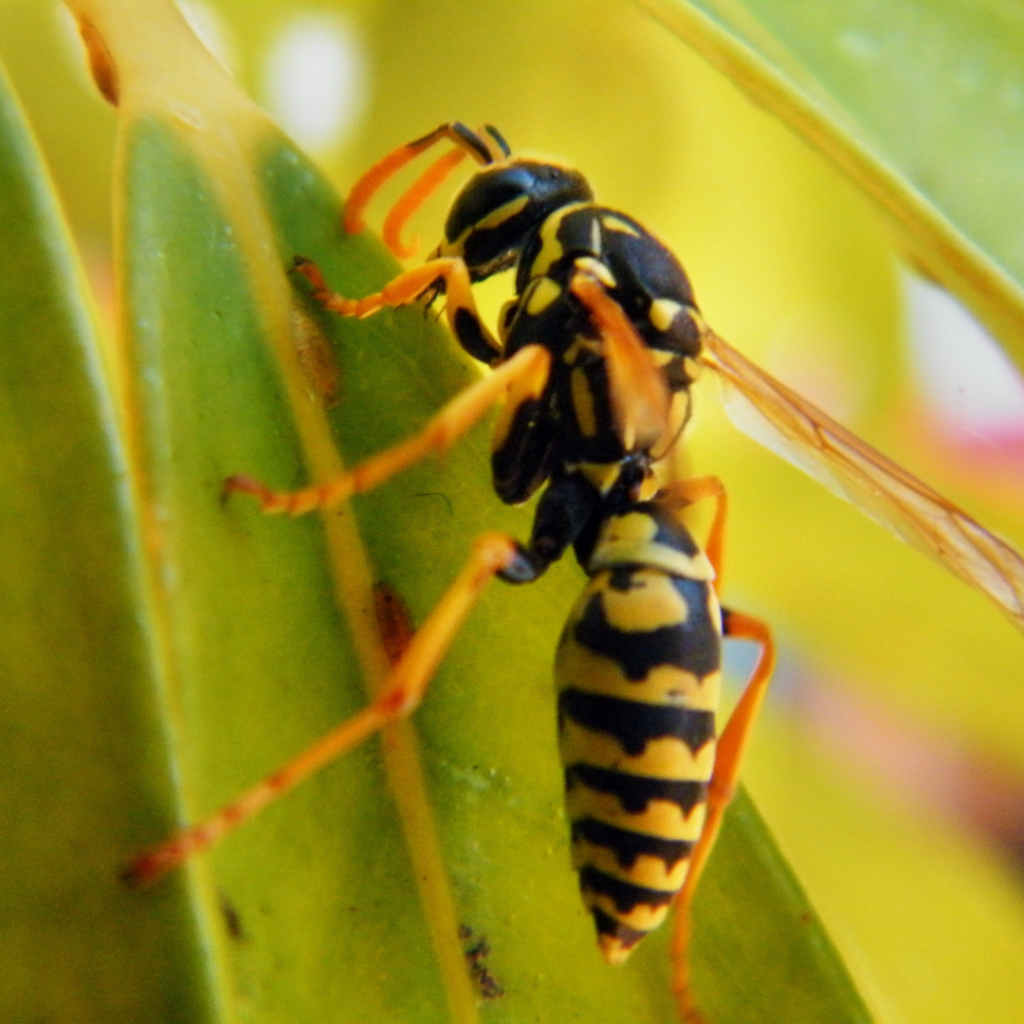
Wasps have smooth, shiny bodies with a narrow waist. Honey bees are fuzzy, rounder, and golden-brown. Paper wasp nests are open grey comb with visible cells. Honey bee colonies are hidden inside a cavity with steady traffic at one entry point. It matters because we relocate honey bees alive and never exterminate them, so tell us what you are seeing when you call.
Can I knock the nest down myself?
We would rather you did not. Knocking down a nest without eliminating the colony leaves defensive wasps at the site, and they will rebuild nearby within days. It also puts you directly underneath an agitated colony, which is how most sting incidents happen. If you are allergic, do not attempt it at all.
Why do wasps keep building in the same spot?
Because it is a good spot. Sheltered corners in eaves, soffits and screen enclosures offer protection from rain and sun, and wasps select for those conditions consistently. That is why we treat the location rather than only removing what is there.
Are wasp treatments safe around children and pets?
Yes, applied correctly and to label. Keep children and pets away from the nest area during treatment and until surfaces are dry. Your technician will give you the specific re-entry time before leaving.
Do I need every nest removed?
No, and we will say so. Mud daubers are solitary, almost never sting, and prey on spiders, so leaving them alone is usually the right call. A paper wasp nest well away from doors, walkways and outdoor living space may not need treating either. What matters is nests near where people actually go.