Fly Control
Explore Our Services
Let's Get Started
- Mon - Sat: 8:00 AM - 5:00 PM
- Parada St, Punta Gorda, FL 33982
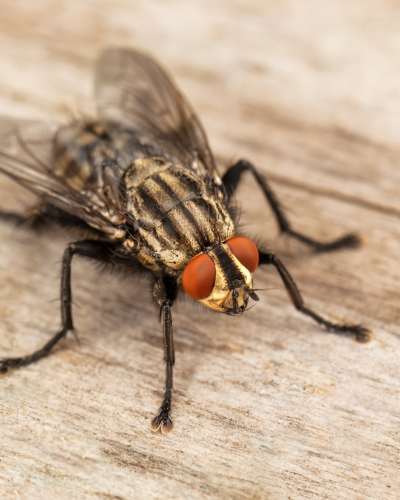
Flies are a symptom. Every fly in your house came from something breeding somewhere, usually within a few feet of where you keep seeing them, and killing the adults does nothing about the source producing the next batch.
The useful part is that the species tells you where to look. Drain flies mean a drain. Blow flies appearing suddenly indoors often mean something has died in a wall or attic. Small flies around the kitchen usually mean the disposal or the recycling. Bug Off Pest works fly problems backward from the insect to the source across Charlotte, Sarasota, Lee and DeSoto counties, because that is the only version of this that stays fixed.
The fly tells you where the problem is
Drain flies are small, fuzzy and moth-like, and they rest on walls near sinks, showers and floor drains rather than flying around the room. They breed in the film of organic gunk lining the inside of a drain pipe. Spraying the room accomplishes nothing at all, because the population is inside the pipe. Even pouring bleach down usually fails, since it runs straight through without touching the film on the pipe walls.
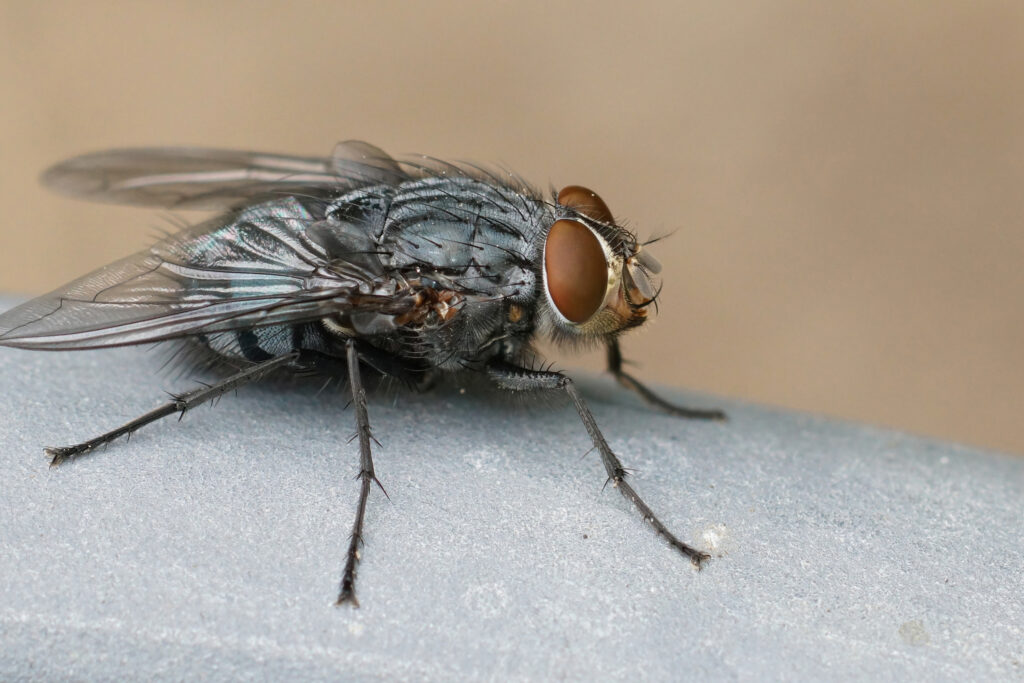
Blow flies are the metallic green or blue ones. Outdoors they are unremarkable. A sudden appearance of them indoors, particularly clustered at a window, very often means something has died inside the structure: a rodent in a wall void, an animal in the attic, a bird in a vent. If this describes your situation, the fly is telling you about a rodent problem, not a fly problem.
Fruit flies hover around kitchens and breed in overripe produce, garbage disposals, recycling bins, drip trays and mop heads. Small volumes of fermenting material are enough.
Phorid flies look similar to fruit flies but run in short bursts across surfaces rather than hovering. This one is worth knowing about: a persistent phorid fly problem, especially in a ground-floor bathroom or near a slab, can indicate a cracked or leaking drain line beneath the slab feeding a breeding site in the soil underneath. That is a plumbing problem wearing a pest costume, and no amount of treatment fixes it.
Fungus gnats are the tiny flies around houseplants. They breed in consistently wet potting soil, and the fix is watering habits rather than insecticide.
Where flies breed around a home
Drains and disposals
Kitchen sinks, bathroom drains, floor drains, rarely-used guest showers and garbage disposals. The organic film inside the pipe is the nursery, not the water.
Garbage, recycling and pet waste
Bins that are not sealed or not rinsed, recycling with residue in it, and pet waste in the yard. All produce house flies quickly in Florida heat.
Something dead in the structure
A rodent in a wall, an animal in the attic, or a bird in a vent. Usually announced by blow flies at the windows and an odour that follows a few days later.
Standing organic material outdoors
Grass clippings piled against the house, wet mulch, drip trays under plants, and water features with debris in them.
Our fly control process
Identification & Source Location
A licensed technician identifies the species, which narrows the search immediately, then locates the actual breeding site. Drains get checked properly, suspected dead-animal sources get traced, and outdoor sources around bins and drainage get assessed. You are told where they are coming from rather than just what was applied.
Source Treatment & Elimination
We treat and eliminate the breeding source. Drains are treated with products that break down the organic film inside the pipe rather than running through it. Dead-animal sources are located and removed where accessible. Adult populations are knocked down alongside this, but the source work is what actually ends the problem.
Prevention & Follow-Up
We identify what will let it start again: bin handling, disposal use, drains that sit unused, drainage against the house. Where the source turns out to be something outside pest control scope, such as a suspected drain line failure under a slab, we tell you plainly so you can get the right trade in rather than paying us to treat it repeatedly.
Why choose Bug Off Pest for fly control
We identify the species before treating, because the species is the diagnosis. We work to the breeding source rather than fogging a room. And when the real cause is a plumbing fault or a dead animal in a wall, we say so instead of selling you a recurring treatment for a problem treatment cannot fix.
- Species identified, breeding source located
- Drains treated properly, not just poured down
- Straight answers when the cause is not a pest problem
Frequently asked questions
Why do the flies come back after I spray?
Because spraying kills the adults in the room and leaves whatever is producing them. A breeding source can turn out a new generation in days in Florida heat, so unless the source is dealt with you are treating the same problem on repeat.
I suddenly have a lot of flies indoors. What does that mean?
If they are metallic green or blue and gathering at windows, the most likely explanation is that something has died inside the structure, commonly a rodent in a wall void or attic. The flies appear before the smell does. This is worth an inspection promptly rather than waiting to see if it clears.
How do I get rid of drain flies?
Not with bleach, which mostly runs straight through. The breeding material is a film of organic matter on the inside wall of the pipe, and it has to be broken down mechanically or with a product that clings to the pipe wall. Scrubbing the drain wall with a brush helps. If they persist after that, the source may be deeper in the line.
Are fly treatments safe around food areas, children and pets?
Yes, applied correctly and to label. Treatment concentrates on breeding sources and harbourage rather than food preparation surfaces, and your technician will tell you what to cover or clear before starting and when the area is safe to use again.
What if the flies keep coming back from a drain no matter what?
That can point to a cracked or leaking drain line, sometimes beneath a slab, feeding a breeding site in the soil below. It is not common but it does happen, and it is a plumbing repair rather than a pest control job. We will tell you if we suspect it rather than keep treating around it.